0%

Sourcing Private Label Business Shirts takes more than finding a factory with an attractive price. The right partner must turn your design, fit, and quality expectations into repeatable production. A clear brief helps: specify fabric composition, collar shape, cuff style, color, size range, and target price before requesting quotes. Even small details matter. A button’s finish or a slightly uneven placket can change how a shirt looks on the rack.

A reliable sourcing process begins with comparing suppliers on relevant experience, sample quality, communication, minimum order quantities, and production timelines. Ask how fabric is sourced and how measurements are checked during production. Review a physical sample, wash it, and inspect the seams, shrinkage, color, and fit. One sample is not proof of consistent quality, though. Request clear specifications and agree on practical inspection points before approving a bulk order. Keep records of revisions, too.

Cost deserves careful attention, but the lowest quote may leave out important services or use different materials. Compare like with like, including packaging, labeling, shipping terms, and any sampling fees. If a supplier’s answer is vague, ask for specifics rather than assuming. That takes time. It can feel tedious, especially when launch dates are close. Still, thoughtful checks can help protect your brand’s reputation and reduce avoidable surprises. No sourcing plan removes every risk, and early estimates may change. A realistic process leaves room to learn, adjust, and build a stronger supplier relationship.
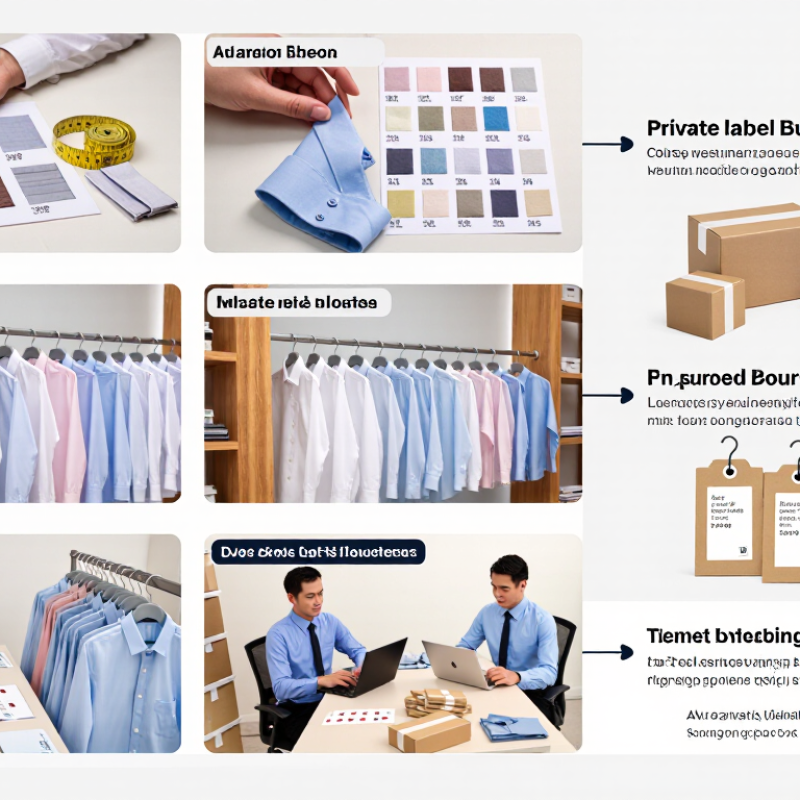
How to Source Private Label Business Shirts?

Define the Product Requirements for Private Label Business Shirts

Define the shirt before requesting factory quotes. Specify its wearer, use, and target price range. A shirt for daily office wear needs different priorities from one used for occasional meetings. Record the intended fit, such as slim, regular, or relaxed, and provide a size chart with chest, shoulder, sleeve, collar, and body measurements. State how each point should be measured and agree on tolerances. Small details matter.

Choose fabric by hand feel and performance, not composition alone. Note the fiber content, weave, weight, color, opacity, and expected care method. A light blue poplin may look polished under office lighting but show through at the chest. Ask for swatches, then wash and press them using the planned care routine. Check shrinkage, puckering, color change, and comfort against the skin. Set boundaries.

Document construction details too: collar shape and stiffness, cuff style, button size, stitch density, pocket placement, and seam finish. Include artwork files and precise placement for the inside label, while keeping packaging requirements clear. Use a measurement sheet, fabric notes, and reference photos in one specification pack. Review a pre-production sample on a real wearer and record corrections in writing. One compromise may remain: a crisp fabric can feel stiff after a full workday. Revise the specification when testing reveals that trade-off.

Identify and Evaluate Suitable Shirt Manufacturers

A suitable shirt manufacturer should match your product, order size, and working style—not just offer an attractive sample. Ask which shirt types they produce regularly, such as Oxford button-downs or poplin dress shirts. Request fabric composition, weight, available colors, and shrinkage test results. Small details matter. Check whether the sample’s collar shape, stitching, buttons, and fit match your specification sheet. A neat sample is useful, but it does not prove that bulk production will be consistent.

Evaluate the factory’s process, not only its sales presentation. Ask who handles pattern development, grading, cutting, sewing, and final inspection. Request a clear sample timeline, minimum order quantity, payment schedule, and written defect-handling process. Ask for recent, relevant production examples, with sensitive customer information removed. I would not treat a polished showroom as proof of dependable output. It is easy to overvalue presentation. Compare specific answers across several manufacturers, and note where details remain vague. Before committing to a larger run, consider a paid pre-production sample and inspect it against your measurements under ordinary lighting. Record any changes in writing. One overlooked point: confirm how fabric substitutions are approved, because a small change can alter hand feel and fit.

How to Source Private Label Business Shirts? - Identify and Evaluate Suitable Shirt Manufacturers

Evaluation Dimension What to Check Useful Benchmark or Requirement Evidence to Request
Product specialization Experience producing woven business shirts, including the intended fit, collar, cuff, and construction details. Review comparable shirt samples and confirm which operations are performed in-house versus subcontracted. Recent product photographs, sample garments, construction details, and a written production-flow outline.
Fabric capability Fiber composition, weave, weight, color consistency, shrinkage, and availability of repeat orders. Specify composition and fabric weight in the product brief; confirm the test method and acceptable tolerances before bulk production. Fabric swatches, supplier specifications, color references, and test reports for relevant performance claims.
Sampling and fit development Pattern development, size grading, sample revisions, and how fit comments are documented. Approve a fit sample and measurement chart before authorizing bulk production; define measurement tolerances in writing. Sample timeline, size set, measurement sheet, and a record of sample changes and approvals.
Minimum order quantity (MOQ) Minimum quantities by style, color, fabric, and size, plus any surcharges for smaller orders. MOQs vary by factory, fabric source, and order configuration; compare the quoted MOQ with your planned size and color breakdown. A written quotation showing MOQ assumptions, price breaks, sample charges, and small-order fees.
Private-label customization Woven or printed labels, hangtags, packaging, buttons, and custom packaging requirements. Confirm artwork specifications, placement, materials, approval steps, and whether each customization changes MOQ or lead time. Digital mock-ups, physical trim samples, packaging specifications, and written customization costs.
Quality control Incoming fabric checks, in-line inspections, final inspection, measurement checks, and defect handling. Agree on an inspection plan and defect definitions before production; use a documented sampling method suited to order size and risk. Quality-control checklist, sample inspection report, measurement records, and corrective-action process.
Compliance and traceability Applicable product-safety, labeling, chemical, labor, and market-specific requirements. Requirements depend on the destination market and product claims; verify that documentation applies to the actual material and production site. Relevant test reports, material declarations, factory audit records, and shipment or lot traceability details.
Lead time and capacity Sample, fabric procurement, production, and shipping timelines; capacity during peak periods. Request separate estimates for each stage and confirm when the production clock starts, including approval and deposit conditions. Production schedule, capacity confirmation, holiday calendar, and agreed dates for key milestones.
Cost transparency Unit price, fabric and trim costs, sampling, packaging, inspection, freight, duties, and payment terms. Compare quotations using the same specification and delivery basis; identify exclusions and currency or price-validity terms. Itemized quotation, payment schedule, shipping terms, and written confirmation of potential extra charges.
Communication and accountability Response clarity, named project contact, escalation route, and willingness to document decisions. Assess communication during sampling and quotation; record specifications, approvals, and changes in writing. Written responses to a consistent questionnaire, meeting notes, and a clear point of contact.
Final supplier decision Compare product quality, total landed cost, delivery reliability, compliance evidence, and communication. Score shortlisted manufacturers against the same weighted criteria and validate the leading option with an approved sample and a small initial order where practical. Completed comparison sheet, approved sample, signed specification, and agreed inspection and delivery plan.

Note: MOQs, prices, testing needs, and lead times depend on the product specification, order volume, production location, and destination market. Confirm all figures and requirements directly with shortlisted manufacturers.

Assess Fabrics, Construction, and Production Standards

A private label business shirt starts with fabric suited to its intended use, not just a soft sample. For daily office wear, compare poplin, oxford, and blends by weight, opacity, breathability, and recovery after washing. Hold each swatch against daylight; thin cloth can look crisp indoors, then show through under bright light. Request fiber content, yarn count, fabric weight, and shrinkage results in writing. Numbers matter, but hand-feel can vary between mills.

Construction deserves close review. Check collar and cuff interlining, seam density, button attachment, placket alignment, and stitch tension. Turn the shirt inside out. Loose threads or puckered seams are small clues, yet they may reveal rushed handling. Measure fit points such as chest, sleeve, collar, and body length across several sizes. Wash and press a pilot sample under realistic care conditions, then compare its measurements and color. One test is not enough.

Confirm production standards before bulk approval. Request a size set, a pre-production sample, an inspection checklist, and agreed tolerances for key measurements. Ask how fabric lots are tracked and defects recorded. A supplier may pass one sample and still vary later; it happens. Keep a reference shirt and document approved trims, shade, labels, and packaging. Revisit the specifications after wear testing. The first version is rarely perfect, and a small revision can prevent a larger repeat problem.

Develop Samples and Specify Private Label Details

Before placing a bulk order, turn your shirt concept into a clear sample brief. Specify the fabric composition, weight, color, and expected shrinkage. Include a measurement chart for the collar, chest, sleeve, and body length. State acceptable measurement tolerances, since small differences can change how a shirt fits. Add construction details, such as stitch density, button material, cuff shape, and pocket placement. Request a size set if your range includes several sizes.

Tips: Send a marked-up reference sample or simple sketches. Label each requested change by location. Keep one approved sample as the fit standard, and record its measurements.

Test samples on different body types and after washing. Check collar roll, seam puckering, button security, and whether the fabric feels comfortable through a full day of wear. Ask the supplier to attach your private label at the exact position and confirm label dimensions, care information, packaging, and folding method. Review a pre-production sample before authorizing production. The first version may still miss the mark. That happens. A sleeve can feel right on a mannequin but restrict movement when someone reaches forward. Note what failed, revise the brief, and approve changes in writing.

Review Pricing, Compliance, and Order Fulfillment Terms

How to Source Private Label Business Shirts?

Review Pricing, Compliance, and Order Fulfillment Terms

Compare landed cost, not just the shirt’s unit price. Request an itemized quote for fabric, buttons, labels, packaging, sampling, freight, and duties. The State of Fashion 2024 report by McKinsey & Company and The Business of Fashion found that 71% of surveyed fashion executives expected sourcing costs to rise in 2024. Treat that figure as a warning to confirm how long quotes remain valid and which currency, fabric weight, and order volume they assume. Small gaps matter. A cheaper quote may exclude the second sample or carton labeling.

For compliance, ask for current fabric test reports, traceable mill and factory details, and written procedures for worker safety and quality checks. The OECD Due Diligence Guidance for Responsible Supply Chains in the Garment and Footwear Sector offers a practical framework for identifying and addressing supply-chain risks. Documents help, but they do not prove every production run meets requirements. Specify who pays for retesting if a shirt fails inspection.

Tips: Put fulfillment terms in the purchase order: minimum order quantity, approval milestones, production lead time, inspection method, defect remedies, and delivery window. Define when the clock starts—after deposit, fabric approval, or final sample sign-off. Get it in writing. I would still leave a little buffer for rework; a tight launch calendar can make even a small collar or sizing issue expensive.

FAQS

How can I evaluate a shirt manufacturer beyond its sample?

Ask which shirt styles it regularly makes and who handles pattern development, cutting, sewing, and inspection. Compare clear answers from several factories. A polished showroom proves little.

What should I check on a pre-production sample?

Compare its collar, stitching, buttons, and fit with your written specifications. Inspect it under ordinary lighting and record requested changes. Small details matter.

How can I choose suitable fabric for business shirts?

Compare poplin, oxford, and blends by weight, opacity, breathability, and wash recovery. Hold swatches against daylight; thin fabric may show through. Feel matters, too.

Which construction details deserve close inspection?

Check collar and cuff interlining, seam density, button attachment, placket alignment, and stitch tension. Turn the shirt inside out. Loose threads can be a warning.

How should I check sizing and wash performance?

Measure chest, sleeve, collar, and body length across several sizes. Wash and press a pilot shirt under realistic care conditions, then compare its measurements and color. One test is not enough.

What should a shirt production quote include?

Request separate costs for fabric, buttons, labels, packaging, samples, freight, and duties. Confirm the quote’s validity, currency, fabric weight, and order volume. Cheap quotes can omit details.

What documents and quality checks should I request?

Ask for current fabric test reports, traceable factory and mill details, inspection checklists, and written safety procedures. Documents help, but they cannot guarantee every production run.

Which terms should appear in the purchase order?

Include minimum order quantity, approval milestones, lead time, inspection method, defect remedies, and delivery window. Define when production timing begins. Leave room for rework; tight calendars can make small sizing issues costly.

Conclusion

Sourcing Private Label Business Shirts begins with a clear product brief. Define the intended fit, size range, colors, styling, target customer, quality expectations, and order volume before approaching manufacturers. Then identify potential shirt makers and evaluate their experience, communication, production capabilities, and ability to meet your requirements. Comparing several suppliers can help you find a partner suited to both your product goals and business needs.

Before placing an order, assess fabric options, stitching, finishing, and the manufacturer’s quality-control standards. Develop samples and confirm all private-label details, such as labels, packaging, and any agreed design specifications. Finally, review pricing, minimum order quantities, production timelines, compliance documentation, payment terms, shipping arrangements, and procedures for handling defects or delays. Clear specifications and written agreements help reduce misunderstandings and support a smoother path from sample approval to order fulfillment.

Amelia

Amelia

Amelia is a professional marketing specialist with a strong understanding of the company’s products, customers, and industry landscape. Through clear communication and thoughtful content strategy, she helps businesses and individuals discover practical solutions that support efficiency,......