0%

Finding dependable Plus Size Wholesale Shirts suppliers takes more than comparing prices. Buyers need clear size charts, consistent grading, wearable fabrics, and reliable restock information. A shirt may look generous on a hanger yet pull across the shoulders or lose its shape after washing. Small details matter.

Designer Christian Siriano has long advocated for inclusive fashion; his message, paraphrased, is: “Fashion should be for everyone.” That principle matters in wholesale, where a broad size label alone does not guarantee thoughtful fit. This guide to the 10 best Plus Size Wholesale Shirts suppliers in 2026 examines practical details such as size availability, fabric descriptions, minimum order quantities, customization options, and sample policies. These checks can help retailers compare suppliers before placing larger orders.

No supplier is perfect. A polished catalog cannot replace a sample, and supplier information can change. We look for transparent product details and useful buying terms, while recognizing that fit preferences vary among customers. Use the list as a starting point, then verify current sizing, stock, and delivery estimates directly with each supplier. The right choice should work on the rack—and after repeated wear.
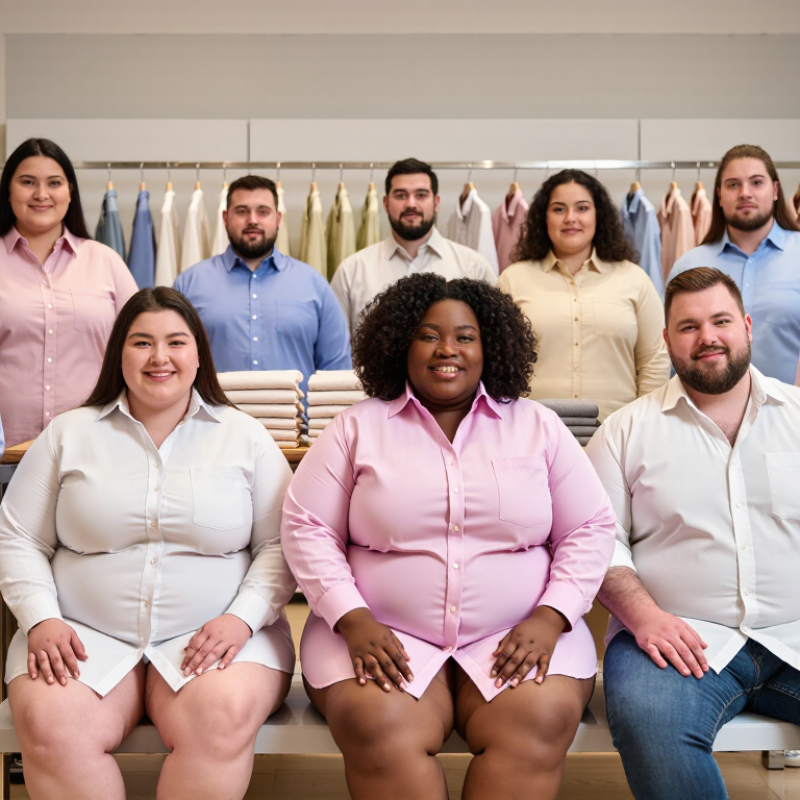
10 Best Plus Size Wholesale Shirts Suppliers in 2026

Understanding Plus Size Wholesale Shirts and Their Market

Plus-size wholesale shirts are not simply standard shirts scaled up. Larger sizes need considered grading, shoulder room, sleeve openings, and button spacing. A shirt that fits across the chest may still pull at the armhole. Fit matters. Retailers therefore assess size charts, fabric recovery, and sample measurements before placing bulk orders. Small inconsistencies become obvious across a rack.

Grand View Research estimated the global plus-size clothing market at US$288.5 billion in 2023, with projected annual growth of 5.9% from 2024 to 2030. That figure covers clothing broadly, not wholesale shirts alone, so it signals demand rather than shirt-specific sales. Market estimates also depend on which sizes and product categories researchers include. Details count. For buyers, useful supplier comparisons include size-range consistency, fabric weight, shrinkage after washing, and repeat-order reliability. A soft woven shirt may feel comfortable, yet wrinkle quickly under daily wear. That trade-off deserves testing, not assumption. Shoppers are not one fit profile; body proportions, preferred ease, and styling needs vary. Wholesale assortments work better when samples are checked on several body shapes, not just against a chart.

How to Evaluate Plus Size Shirt Suppliers in 2026

Evaluate plus-size shirt suppliers by testing their size range, not just their size chart. Request samples in several sizes and compare shoulder width, sleeve opening, body length, and ease across the range. A 2XL that fits well proves little if the 5XL pulls at the buttons. Check whether the supplier can share garment measurements, grading rules, fabric composition, and expected shrinkage after washing. Ask for a wash-tested sample. Small differences matter.

Review production details before placing a large order. Confirm minimum quantities, sample fees, repeat-order lead times, and how defects are handled. For fabric, request weight and close-up photos of seams, collars, and plackets; a clear photo can reveal uneven stitching, but it cannot replace inspection. Ask for references from comparable wholesale buyers, then verify that their order sizes and product types match yours. Keep the answers in writing.

Fit feedback should be specific and consistent. Try shirts on people with different body shapes, and note where fabric pulls or sleeves ride up. One fitting is not enough. I would not assume a supplier’s “inclusive sizing” claim guarantees a comfortable fit; that phrase can hide gaps in grading. Recheck measurements on a later production sample, since materials or factories may change. Some checks take time. But a low quote is less useful when the delivered shirts fit differently from the approved sample.

10 Best Plus Size Wholesale Shirts Suppliers in 2026 - How to Evaluate Plus Size Shirt Suppliers in 2026

Use this scorecard to compare suppliers without relying on unverified rankings. The benchmarks below are buyer-set evaluation guidelines, not claims about any particular supplier or universal industry standards. Confirm details for each style, order, and destination market.

# Evaluation Dimension Practical Evaluation Benchmark Information to Request and Verify Suggested Weight
1 Plus-Size Range Check the actual size span offered for the specific shirt styles you plan to buy. Prefer a range that covers your customers’ needs without relying on size labels alone. A current size chart showing garment measurements for every offered size, including chest, body length, shoulder, sleeve, and hem measurements. 15%
2 Fit and Size Grading Confirm that measurements increase consistently between sizes and that the shirt is tested on an appropriate fit model. A larger size label by itself does not demonstrate a well-graded fit. The grading chart, fit notes, sample measurements, and details on how the supplier checks fit across the size range. 15%
3 Fabric Specifications Compare fabric composition, weight, stretch, opacity, and care requirements with the intended use and price point. There is no single fabric weight or fiber blend that suits every shirt style. Written fiber-content specifications, fabric weight and construction details, care instructions, and a physical swatch or pre-production sample. 12%
4 Construction and Finishing Inspect seams, buttons, buttonholes, collars, cuffs, hems, and stress points. Compare workmanship across samples rather than judging from product photographs alone. A finished sample, close-up product images, construction details, and written specifications for trims and finishing. 12%
5 MOQ and Size Assortment Assess the minimum order quantity by style, color, and size. Confirm whether orders can be split across sizes and whether the required size assortment is commercially workable for your business. A written MOQ schedule, size-curve options, color minimums, and any additional charges for mixed-size or mixed-color orders. 10%
6 Pricing and Landed Cost Compare the full expected cost, not just the quoted unit price. Include packaging, sampling, shipping, duties, taxes, and payment or currency-related fees where applicable. A dated quotation with currency, quantity breaks, included services, shipping terms, payment terms, and clearly listed exclusions. 10%
7 Samples and Production Timing Set acceptable sample and production timelines for your launch calendar. Ask how timing is affected by fabric availability, approvals, order volume, and peak-season capacity. Written sample and production estimates, approval milestones, shipping estimates, and the supplier’s process for notifying buyers about delays. 8%
8 Reorders and Supply Continuity Determine whether core styles, fabrics, and colors can be reordered, and whether specifications can be kept consistent between production runs. Reorder terms, stated availability periods for core materials, change-notification procedures, and records or samples from repeat production where available. 7%
9 Quality Control and Remedies Agree on measurable inspection criteria before production. Understand how the supplier handles defects, shortages, incorrect sizes, and products that differ from approved samples. Written quality standards, inspection options, defect-reporting deadlines, claim documentation requirements, and the supplier’s remedy policy. 6%
10 Compliance and Traceability Check that product labeling and any compliance claims are suitable for the countries where the shirts will be sold. Verify claims rather than treating certificates or logos as proof on their own. Applicable test reports or certificates, facility and material details where relevant, label information, and documentation supporting any environmental or social claims. 5%

How to compare suppliers: Score each criterion from 1 to 5 using documents and samples you have verified. Multiply each score by its suggested weight, then compare the weighted totals alongside your budget, fit requirements, and delivery schedule.

10 Best Plus Size Wholesale Shirt Suppliers in 2026

Choosing among the 10 best plus size wholesale shirt suppliers in 2026 takes more than comparing catalog photos. A dependable supplier should publish garment measurements, not just broad labels such as 1X or 3X. Check chest, shoulder, sleeve, and length measurements across the size run. Small grading errors become obvious when a shirt pulls at the buttons or sleeves twist after washing. Ask for a current size chart and samples in adjacent sizes. Fit is personal, but data helps.

Fabric details matter too. Request fiber content, fabric weight, care instructions, and close-up photos of seams and buttons. For poplin, rayon blends, or soft knits, wash a sample; a smooth showroom finish can hide shrinkage or puckering. Ask suppliers to confirm minimum order quantities, production timelines, stock depth, and how they handle damaged pieces. Get answers in writing. Compare repeat-order consistency, especially color matching between batches. Buyers can overvalue a low unit price, then spend more time correcting uneven sizing or delayed replenishment. Not every issue shows up in a chart, so leave room for real wear testing before committing inventory.

Comparing Supplier Sizes, Quality, Prices, and Policies

When comparing plus size wholesale shirt suppliers, start with the measurement chart, not the size labels. Check bust, waist, hip, sleeve, and shirt length across several sizes. Some suppliers add body width but leave sleeves or shoulders unchanged. That mismatch can show in photos and customer reviews. Request samples in both a middle and upper size. Useful, but not perfect.

Inspect fabric weight, seam finish, button spacing, and how the shirt hangs after washing. A crisp sample may feel different after several hours of wear. Ask whether fabric composition and measurements stay consistent between production runs. Compare prices only after adding sample fees, minimum order quantities, shipping, and any customization charges. The lowest unit price may not be the lowest usable cost. Keep a simple cost sheet.

Policies matter when a shipment arrives late or sizes vary. Check the written terms for defect claims, replacements, order changes, and processing times. Ask what evidence is needed, such as photos or a batch number, and how quickly a claim must be filed. Get answers by email before placing a large order. Policy wording can still leave gray areas, so test the process with a small order first.

Choosing a Supplier and Placing a Wholesale Order

Choosing a plus-size wholesale shirt supplier starts with fit evidence, not the lowest unit price. Request garment measurements for every size, fabric weight, fiber content, shrinkage results, and photos showing different body shapes. Ask about minimum order quantities, reorder timelines, defect allowances, and size substitutions. Put the answers in writing. The NRF and Happy Returns’ 2024 Retail Returns Landscape estimated U.S. retail returns at $890 billion, or 16.9% of annual sales. That figure covers all retail, not plus-size apparel alone, but it shows why clear fit information and quality checks matter. A size chart can look precise and still miss how a shirt hangs on a real body.

Tips: Order a sample before committing. Measure the chest, sleeve, and body length yourself, then compare them with the supplier’s chart. Wash one sample to check shrinkage. Fit varies. Test it.

Before placing a bulk order, confirm the size ratio, fabric color, labeling, packaging, and delivery window on the invoice. Start with a small run if your budget allows, and keep a signed sample for comparison during inspection. Ask how the supplier documents shortages or damaged pieces. Still, no checklist predicts every fit issue; record customer feedback and adjust the next size mix accordingly.

Plus-Size Shirt Buying Guide: Approximate Bust Measurements

Use these approximate US size conversions as a starting point when comparing wholesale shirt size charts. Measurements vary by supplier, fit, and garment, so confirm each supplier’s garment measurements and sample sizing before placing a bulk order.

FAQS

How can I check whether a supplier’s size range fits well?

Request samples in a middle and upper size. Compare shoulder width, sleeve opening, body length, and button tension. One size proves little.

What measurements should I request?

Ask for chest, waist, hip, sleeve, and shirt-length measurements for every size. Check whether grading changes sleeves and shoulders, not just body width.

Should I wash a sample before ordering?

Yes. Measure it before and after washing to check shrinkage. Fabric changes.

What details should I inspect on a shirt sample?

Look closely at fabric weight, seams, collar shape, button spacing, and how the shirt hangs. Photos help, but they cannot replace inspection.

How should I compare supplier prices?

Add sample fees, minimum quantities, shipping, and customization charges. A low unit price may still lead to a costly order.

Which policies should I confirm before placing an order?

Get written terms for defects, replacements, order changes, and claim deadlines. Ask what proof is required, such as photos or batch numbers.

What should appear on the wholesale order invoice?

Confirm the size ratio, fabric color, labels, packaging, and delivery window. Keep a signed sample for comparison during inspection.

Is a small test order worth the extra time?

It can reveal fit or quality problems before a larger purchase. Still, one test cannot predict every issue. Record customer feedback and adjust later.

Conclusion

This guide explores the growing market for Plus Size Wholesale Shirts and explains what retailers should consider when sourcing inclusive apparel. It outlines practical ways to evaluate suppliers, including reviewing size ranges, fabric quality, construction, pricing, minimum order quantities, production capacity, and customer support. The guide also introduces ten supplier options for 2026, offering a framework for comparing them without relying on a single measure of value.

Before placing an order, buyers should compare product samples, sizing consistency, shipping terms, return policies, and payment requirements. A clear understanding of these details can help retailers choose a supplier that fits their budget, inventory needs, and customer expectations. By planning carefully and confirming order terms in advance, businesses can build a dependable wholesale assortment that offers comfortable, well-made shirts across a broader range of sizes.

Amelia

Amelia

Amelia is a professional marketing specialist with a strong understanding of the company’s products, customers, and industry landscape. Through clear communication and thoughtful content strategy, she helps businesses and individuals discover practical solutions that support efficiency,......