Sourcing Men Plaid Shirts globally in 2026 requires more than comparing factory prices. Buyers must connect fabric quality, supplier capability, compliance, and delivery reliability. A soft brushed cotton shirt may look excellent in a sample, yet shrink after washing. That detail can damage an entire retail launch.
Kate Fletcher, a leading sustainable-fashion researcher, has said, “Sustainability is a journey, not a destination.” Her words suit global apparel sourcing. Responsible buyers should examine fiber origin, dyeing processes, labor conditions, packaging, and transport emissions. They should also request current certifications and independent audit records. Documents matter. Evidence matters more.
A practical sourcing process begins with a precise product brief. Specify plaid scale, yarn count, fabric weight, colorfastness, shrinkage limits, stitching density, and acceptable defects. Ask factories for production samples, not only showroom pieces. Compare suppliers across China, India, Bangladesh, Turkey, Portugal, and other established manufacturing regions. Review minimum order quantities, payment terms, lead times, customs requirements, and contingency plans. A low quote may hide weak quality control or expensive rework. That happens.
No spreadsheet predicts every delay. Weather, port congestion, currency movement, and changing consumer demand can disturb even careful plans. Buyers should therefore approve realistic timelines and maintain a backup supplier. The right partner will explain limitations openly, protect traceability, and improve after criticism. That standard creates stronger Men Plaid Shirts programs, even when the sourcing journey remains imperfect.
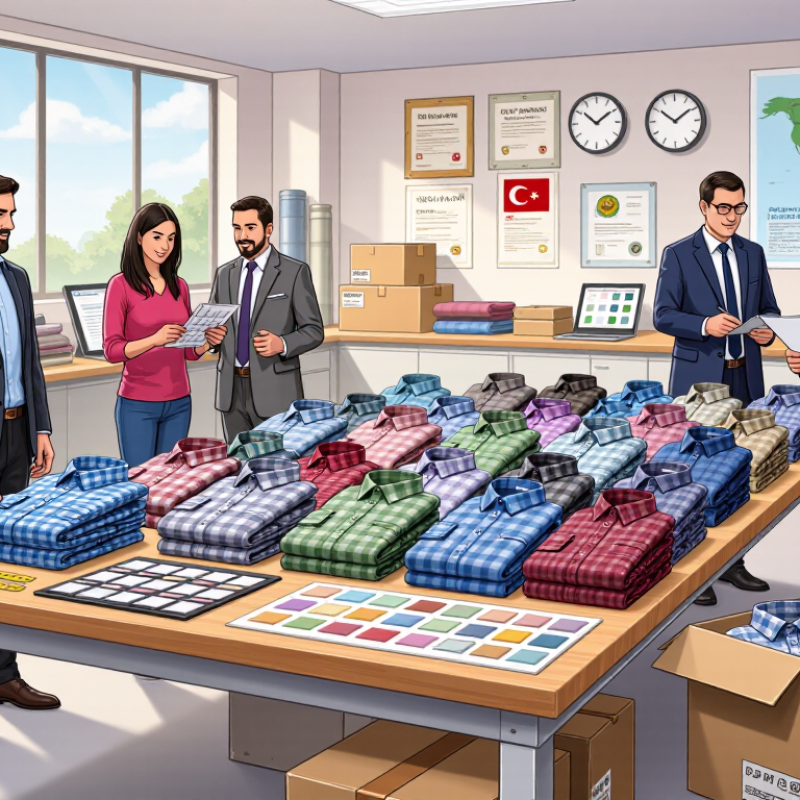
Defining Product Requirements for Men’s Plaid Shirts
Before sourcing men’s plaid shirts globally in 2026, define the product in measurable terms. Specify the fiber blend, fabric weight, weave, and acceptable shrinkage. For example, a 180–220 GSM cotton blend suits transitional weather. A heavier brushed fabric feels warmer, but may increase freight costs. Choose the plaid scale carefully. Large checks create a casual look, while smaller checks appear more refined.
Fit requirements need equal attention. Provide a graded measurement chart for chest, shoulder, sleeve, collar, and body length. State the intended fit clearly: regular, relaxed, or tailored. Include tolerance limits, such as ±1 centimeter for key measurements. Request a physical sample before bulk production. Check button attachment, seam strength, pocket alignment, and sleeve movement. Plaid matching at the front pocket is a small detail, but customers notice it quickly.
Color specifications should include lab references, not vague words like “dark red.” Require colorfastness testing for washing, rubbing, and perspiration. Clarify labeling, fiber content, care instructions, carton dimensions, and packing methods. Suppliers should confirm production capacity, lead time, minimum order quantity, and inspection procedures. A third-party inspection can verify measurements and workmanship before shipment. It adds cost, but reduces avoidable disputes. A perfect brief is rare. I have seen attractive samples fail after washing because the fabric softened unevenly. Build testing into the requirement, not as an afterthought.
The chart presents practical 2026 procurement thresholds for men's plaid shirts. These requirements cover material traceability, colorfastness, dimensional stability, size consistency, packaging, and delivery performance, helping buyers compare suppliers without relying on brand-specific data.
Identifying Global Sourcing Markets and Supplier Types
How to Source Men Plaid Shirts Globally in 2026?
Identifying Global Sourcing Markets and Supplier Types
Global plaid shirt sourcing starts with fabric capability, not factory size. Pakistan and India offer strong cotton and flannel expertise, while Bangladesh suits larger, cost-sensitive programs. Turkey can support shorter European replenishment cycles. Portugal often fits smaller runs and higher finishing expectations. These are useful patterns, not guarantees.
The Textile Exchange Materials Market Report 2024 estimates global fiber production reached 124 million tonnes in 2023. It may approach 160 million tonnes by 2030. This growth creates more material choices, but also complicates traceability. Request yarn details, fabric weight, shrinkage results, and colorfastness reports. A supplier should explain where yarn, dyeing, and finishing occur.
Choose the supplier type carefully. A vertically integrated mill can control yarn, weaving, dyeing, and sewing. It may offer better consistency, but minimum orders can be demanding.
A cut-and-sew factory is more flexible when fabric is purchased separately. Trading companies provide access to several factories, although production visibility may be weaker.
Buying agents can help with audits and communication, but their fees need clear disclosure.
Use UN Comtrade data for HS-code trade comparisons, then verify findings through factory calls and sample orders. The World Bank’s Logistics Performance Index 2023 also helps assess customs reliability and transport conditions. Do not trust attractive samples alone. I have seen good prototypes hide unstable dye lots and weak button attachments. A small pilot order remains imperfect, yet it exposes problems earlier.
Evaluating Manufacturers, Materials, and Production Standards
When sourcing men’s plaid shirts globally in 2026, evaluate the manufacturer before negotiating the lowest price. Request factory records, monthly capacity, machinery details, and recent production samples. A reliable supplier should explain fabric sourcing, cutting controls, sewing inspections, and packing procedures clearly. Vague answers deserve closer checking.
Material selection affects comfort, appearance, and production risk. Cotton flannel offers warmth, but brushing quality can vary between batches. Cotton blends may reduce shrinkage, yet they can feel less breathable. Ask for fabric weight, fiber composition, colorfastness results, and shrinkage measurements. Inspect the plaid alignment across the chest pocket and side seams. Details matter. Uneven matching quickly makes a shirt look inexpensive.
Production standards should include in-line inspections, final measurements, needle control, and documented defect limits. Independent testing can verify color transfer, seam strength, and fabric composition. During an audit, look at worktables, lighting, worker training records, and sample approval tags. A clean showroom proves little. Production floors reveal more. One common mistake is approving a beautiful sample without checking repeatability across hundreds of pieces. That decision may create costly rework. Seasonal demand also changes factory attention, so confirm timelines using a small trial order before expanding volume. A written corrective-action process is useful, though it does not replace regular communication and physical inspections.
Managing Pricing, Orders, Quality Control, and Shipping
Global sourcing starts with a landed-cost sheet, not a factory quote. Record fabric, sewing, labels, cartons, testing, duty, payment fees, and freight separately. Request three quotations using identical plaid scale, fabric weight, shrinkage limits, and delivery terms. Textile Exchange’s Materials Market Report 2024 recorded 124 million tonnes of global fiber production in 2023. It projects about 160 million tonnes by 2030, increasing pressure on traceable material planning. That pressure affects margins.
For orders, use a rolling forecast with fixed dates for sampling, bulk approval, and shipment release. Reserve capacity only after checking the supplier’s recent production records and subcontracting policy. The World Bank’s 2023 Logistics Performance Index covers 139 economies and measures customs, infrastructure, and shipment reliability. Use those scores when comparing production countries, but do not treat them as guarantees. UNCTAD reports that maritime transport carries over 80% of global trade by volume. A port delay can therefore disrupt a carefully planned plaid-shirt launch.
Quality control should begin before cutting. Approve a sealed reference sample, then verify color alignment, fabric weight, measurements, buttons, stitching, and shrinkage. Use an agreed AQL plan, with photographs and inspection records attached to each purchase order. Check cartons before loading, not only after arrival. I would not pretend forecasts are always accurate. Plaid matching also creates unexpected fabric waste. A small pilot order can expose weak grading, late approvals, or unstable dye lots before the full quantity is committed.
How to Source Men Plaid Shirts Globally in 2026 — Pricing, Orders, Quality Control, and Shipping
| Sourcing Region |
Typical Product Positioning |
Common Fabric Options |
Indicative FOB Price / Shirt |
Typical MOQ / Color |
Sample Lead Time |
Bulk Production Lead Time |
Recommended QC Controls |
Typical Defect Target |
Ocean Transit to Major Import Markets |
Air Freight Planning Range |
Best Use Case |
| China |
Wide supplier base, flexible trims, fast development, broad quality range |
100% cotton flannel, cotton-polyester, brushed twill, recycled polyester blends |
US$5.80–11.50 |
500–1,000 pieces |
7–14 days |
35–55 days |
Pre-production sample, inline inspection, final AQL inspection, carton and needle detection |
AQL 2.5 major / 4.0 minor |
18–35 days |
US$5.50–10.00/kg |
Seasonal collections, detailed styling, medium to large orders |
| India |
Cotton-focused production with strong fabric and printing capabilities |
Cotton flannel, organic cotton, brushed cotton, cotton-linen blends |
US$6.20–12.80 |
500–1,000 pieces |
10–18 days |
40–65 days |
Fabric GSM and shrinkage testing, colorfastness testing, seam inspection, final random inspection |
AQL 2.5 major / 4.0 minor |
25–45 days |
US$6.00–11.00/kg |
Natural fibers, washed finishes, sustainable-material programs |
| Bangladesh |
Competitive pricing for high-volume basic and mid-market apparel |
Cotton flannel, cotton-polyester, recycled polyester blends, brushed twill |
US$4.80–9.20 |
1,000–3,000 pieces |
10–18 days |
45–70 days |
Factory compliance review, inline measurement checks, needle control, final AQL inspection |
AQL 2.5 major / 4.0 minor |
28–50 days |
US$6.00–11.00/kg |
Large repeat orders and price-sensitive retail programs |
| Vietnam |
Reliable cut-and-sew capacity with strong export execution |
Cotton flannel, cotton-polyester, Tencel™ blends, recycled polyester |
US$6.50–12.50 |
800–2,000 pieces |
10–16 days |
40–60 days |
Pre-production approval, measurement audits, colorfastness testing, final inspection and carton audit |
AQL 2.5 major / 4.0 minor |
18–35 days |
US$5.50–10.00/kg |
Consistent quality, export-oriented production, repeat programs |
| Turkey |
Shorter replenishment cycles for European buyers and fashion-oriented programs |
Cotton flannel, organic cotton, brushed twill, cotton-elastane blends |
US$8.50–16.50 |
300–800 pieces |
7–14 days |
25–45 days |
Fabric inspection, shrinkage testing, fit approval, inline inspection and final AQL inspection |
AQL 2.5 major / 4.0 minor |
5–15 days |
US$4.00–8.00/kg |
European replenishment, smaller batches, premium mid-market products |
| Portugal |
Premium manufacturing, smaller production runs and higher finishing capability |
Organic cotton flannel, brushed cotton, recycled fibers, premium twill |
US$12.00–24.00 |
150–500 pieces |
10–18 days |
30–50 days |
Detailed workmanship audit, fit and measurement approval, fabric testing, final inspection |
AQL 1.5 major / 2.5 minor |
5–12 days |
US$4.00–8.00/kg |
Premium capsules, limited runs and fast European delivery |
| Pakistan |
Cost-effective cotton manufacturing with vertically integrated textile capacity |
Cotton flannel, brushed cotton, cotton-polyester, recycled cotton blends |
US$5.20–10.20 |
800–2,000 pieces |
10–18 days |
40–65 days |
Fabric weight and shrinkage checks, colorfastness testing, seam inspection, final random inspection |
AQL 2.5 major / 4.0 minor |
25–45 days |
US$6.00–11.00/kg |
Cotton-heavy programs and value-focused bulk orders |
Planning notes: FOB prices are indicative 2026 budgeting ranges for standard men's long-sleeve plaid shirts, excluding fabric upgrades, special washes, labels, duties, taxes, inspection fees and destination delivery. Actual quotations vary with fabric weight, composition, order quantity, color count, trim requirements, certification, payment terms and seasonal capacity. Transit times are port-to-port planning ranges and exclude customs clearance, inland delivery and potential congestion.
Reviewing Compliance, Sustainability, and Supplier Performance
How to Source Men’s Plaid Shirts Globally in 2026?
Global sourcing should begin with documented control, not attractive factory photos. For each supplier, request business licenses, factory addresses, subcontractor records, and worker age-verification procedures. Check working hours, wage records, fire safety, and chemical controls against destination-market requirements. The OECD Due Diligence Guidance for Responsible Supply Chains recommends risk-based monitoring and corrective action. A social audit alone is not enough. It may miss temporary workers, unpaid overtime, or unauthorized subcontracting.
Sustainability needs measurable details. The Textile Exchange Materials Market Report 2024 recorded 124 million tonnes of global fiber production in 2023. It projects about 160 million tonnes by 2030. For plaid shirts, compare preferred-fiber percentages, recycled-content certificates, water use, energy sources, and wastewater results. UNEP’s 2023 textile value-chain report estimates textiles create 2–8% of global greenhouse-gas emissions. Ask suppliers for product-level emissions data, not vague “eco” claims. Better records matter.
Supplier performance should combine delivery, quality, and openness. Track on-time shipment rates, fabric shade consistency, shrinkage, defect rates, and corrective-action closure days. Inspect the first production run carefully. Small checks prevent large returns. My weak point is relying too heavily on monthly scorecards; they can hide seasonal pressure. Worker interviews and unannounced verification add useful friction. Still, data may remain incomplete. That uncertainty should influence order size, payment terms, and follow-up frequency.
FAQS
Specify fiber blend, fabric weight, weave, shrinkage, and finishing. A 180–220 GSM cotton blend suits transitional weather. Heavier brushed fabric feels warmer, but freight may cost more.
Provide graded measurements for chest, shoulders, sleeves, collar, and body length. State whether the fit is regular, relaxed, or tailored. Allow about ±1 centimeter for key measurements.
Large checks create a casual appearance. Small checks look more refined. Match the front pocket carefully. Customers notice uneven patterns quickly.
Test button attachment, seam strength, pocket alignment, and sleeve movement. Wash the sample before approval. A good-looking sample may still soften unevenly.
Integrated suppliers can control yarn, weaving, dyeing, and sewing. Cut-and-sew factories may offer more flexibility. Trading companies provide options, but production visibility can be weaker.
Request yarn details, fabric weight, shrinkage results, and colorfastness reports. Ask where dyeing and finishing occur. Confirm capacity, lead time, minimum order quantity, and subcontracting practices.
Create a landed-cost sheet before accepting a factory quote. Include fabric, sewing, labels, cartons, testing, duties, payment fees, and freight. Compare quotations with identical specifications.
Approve a sealed reference sample before cutting begins. Check color alignment, measurements, buttons, stitching, fabric weight, and shrinkage. Attach photographs and inspection records to each order.
A small pilot order can reveal weak grading, unstable dye lots, or late approvals. It may expose fabric waste from plaid matching. Forecasts are not always accurate.
Conclusion
Sourcing Men Plaid Shirts globally in 2026 requires a structured approach that begins with clear product specifications. Buyers should define fabric composition, plaid patterns, color options, sizing, fit, construction details, labeling, packaging, and target price before contacting suppliers. Global sourcing markets can then be compared according to production capabilities, minimum order quantities, lead times, labor conditions, and communication efficiency. Different supplier types, including factories, trading companies, and specialized garment producers, should be assessed based on their experience and ability to meet specific requirements.
A reliable sourcing process also includes reviewing fabric quality, colorfastness, stitching, shrinkage control, and production standards. Buyers should negotiate pricing, order quantities, payment terms, delivery schedules, and quality inspection procedures in writing. Shipping plans must account for customs documentation, packaging, transit time, and potential delays. Finally, compliance, responsible material choices, workplace standards, environmental practices, and ongoing supplier performance should be monitored regularly to support consistent quality, transparent cooperation, and dependable long-term sourcing.