0%

Interest in 3D Printed T-Shirts is growing, but supplier claims still need close inspection. Additive manufacturing can enable unusual textures, short production runs, and on-demand customization. Comfort is not guaranteed. Buyers should test stretch recovery, seam strength, wash durability, and how the fabric feels against the skin. A shirt that looks striking on a screen may feel stiff after an hour of wear.

The scale of the wider market offers context, not proof of demand for printed apparel. Grand View Research estimated the global 3D-printing market at USD 20.37 billion in 2023 and projected a 23.5% compound annual growth rate from 2024 to 2030. Textile Exchange reported that global fiber production reached 124 million tonnes in 2023, with polyester accounting for about 57%. These figures highlight the importance of checking both production capability and material claims. They do not establish that any supplier can deliver a comfortable, durable T-shirt.

As computational designer and additive-manufacturing researcher Neri Oxman has said, “What we make, makes us.” For sourcing, that idea points to practical questions: What materials are used? Can the supplier provide a finished sample, material specifications, and repeatable test results? Ask for evidence. Compare the sample’s weight, flexibility, print consistency, and care performance with your requirements. Supplier experience matters, but documentation matters too. I would not rely on renderings alone; even a convincing sample can hide production inconsistencies. A careful review helps buyers find reliable partners without treating a promising technology as a proven product.
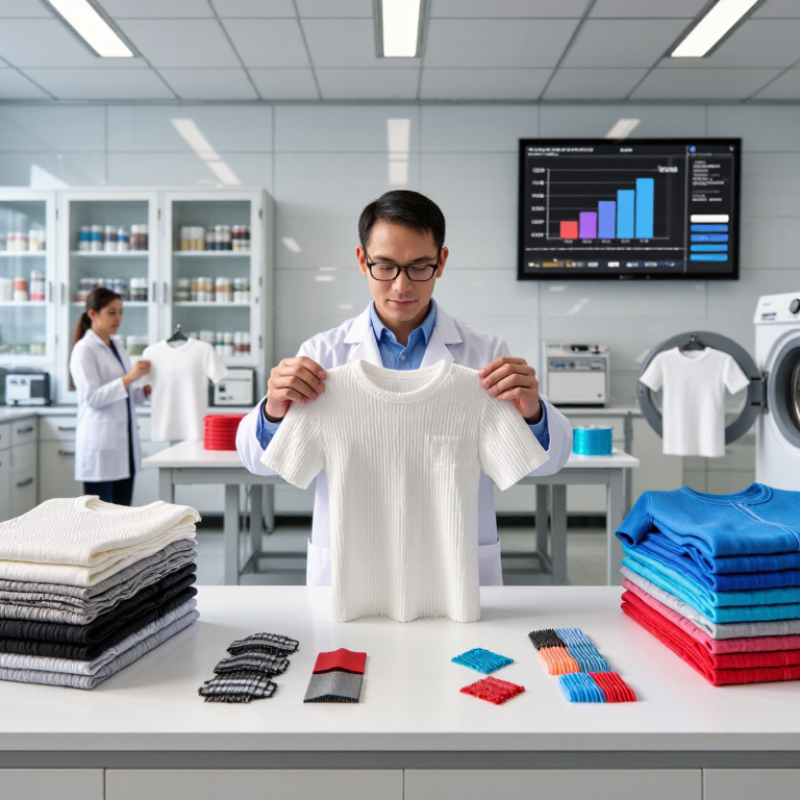
How to Source 3D Printed T Shirts from Reliable Suppliers

Define 3D-Printed T-Shirt Methods, Materials, and Buyer Specifications

Before requesting quotes, define what “3D-printed” means to your supplier. The term is not standardized. It may describe raised ink printed onto fabric, layered heat transfers, or a garment made with an additive textile process. These methods feel and perform differently. Ask for the exact production method, not just a product photo. A raised print can add texture to a cotton jersey shirt, while a knitted structure may require different yarn and machinery.

Specify the fabric composition, weight, fit, size range, print placement, relief height, and color references. For example, request the print’s width in centimeters and its distance from the collar seam. Share vector artwork and note which areas should feel raised. Ask how the decoration handles stretching and repeated washing. Request a sample in the intended fabric, then inspect its edges, hand feel, and alignment under ordinary light. Ask for a written size-tolerance range and sample approval before bulk production. Small details matter. Suppliers may use “3D” loosely, so confirm every specification in writing. A sample can still miss the final feel; that is worth discussing before production.

Screen Suppliers for ISO 9001 Quality Controls and ASTM F42 Expertise

When sourcing 3D printed T-shirts, ask how each supplier controls material, production, and inspection changes. An ISO 9001 certificate is useful, but check its scope, issuing body, and covered production site. A certificate alone does not prove that a specific garment will meet your needs.

Request sample quality records: incoming-material checks, measurement results, defect logs, and corrective-action reports. For a printed or additively formed feature, ask how the supplier tests adhesion, flexibility, and durability after washing. Ask for evidence. A clear test method matters more than a polished sales sheet. Keep the records.

ASTM F42 expertise can help suppliers discuss additive manufacturing terminology, process controls, and relevant test methods. However, ASTM F42 participation or familiarity is not product certification. Ask which standards or practices apply to the actual process, and how results are documented. Compare answers with a physical sample, including seams, print edges, and areas that stretch during wear. Early samples can be uneven; that is not automatically a failure, but vague explanations about defects deserve scrutiny. A reliable supplier should explain what changed, show the revised inspection criteria, and provide traceable records for the next production run.

Test Samples for Colorfastness Under ISO 105-C06 and Shrinkage Under AATCC 135

Before placing a bulk order, request samples made with the same fabric, print process, and curing settings planned for production. A small swatch can look vivid under showroom lights, yet fade after washing. Test the complete shirt, not just an unprinted fabric square.

For colorfastness, ask an independent textile laboratory to assess samples under ISO 105-C06. Agree on the laundering procedure, temperature, and detergent before testing, since conditions affect results. Check both color change and staining on adjacent fabric. A pale collar or white test strip makes transfer easier to notice. Record the sample’s shade and print location before washing. One test is useful, but it may not represent every production batch.

Measure garment length and chest width before and after laundering under AATCC 135. Confirm the selected wash and drying settings, then compare dimensional changes against tolerances stated in your purchase specification. Keep the same measuring points each time. Small shifts matter. A shirt that twists after drying may also reveal uneven fabric tension or finishing. Results can be messy; I would not treat a passing sample as a guarantee. Ask the supplier to explain any unexpected shrinkage and repeat testing on a replacement sample before approving production.

Assess Fabric Strength and Abrasion Using ASTM D5034 and ASTM D4966

For 3D-printed T-shirts, a vivid surface is not enough. Ask suppliers how they verify the fabric beneath the print. ASTM D5034 measures breaking strength and elongation using a grab test. It helps show whether fabric can withstand pulling during wear and handling. Request results for the actual fabric weight and construction, not a similar-looking substitute. Check the test date, sample identification, and laboratory report. Small details matter.

ASTM D4966 uses the Martindale method to assess fabric abrasion resistance. Ask for testing on printed panels as well as unprinted fabric, with the test conditions clearly recorded. Look for changes such as thinning, surface damage, or print wear. A strong base fabric does not guarantee a durable printed area. One test never tells everything. Compare results across suppliers, but avoid treating one number as a universal pass mark; intended use and fabric type matter. I would also wash and inspect a few finished samples. Lab data is useful, but real garments can still surprise you.

How to Source 3D Printed T Shirts from Reliable Suppliers - Assess Fabric Strength and Abrasion Using ASTM D5034 and ASTM D4966
Assessment dimension ASTM D5034 — Grab Test ASTM D4966 — Martindale Test What to request from the supplier
Purpose Measures fabric breaking strength and elongation using a grab-test procedure. Evaluates fabric abrasion resistance using a Martindale abrasion tester. Test reports for the actual fabric and finished print intended for production.
Primary result Breaking force, reported in a force unit such as newtons (N) or pounds-force (lbf); elongation may be reported as a percentage. Abrasion cycles to a defined endpoint, or the observed fabric condition after a stated number of cycles. Measured values, units, number of specimens, average, and any reported variation.
Fabric directions Request results in both fabric directions, commonly identified as warp and filling for woven fabrics or course and wale for knitted fabrics, where applicable. Request the tested specimen orientation and the face tested; include the printed face when relevant to the product. A clear description of the fabric construction, tested face, and specimen orientation.
Abrasion details Not an abrasion method; it assesses tensile breaking behavior. Uses repeated rubbing in a Martindale motion. The report should identify the endpoint and test conditions used. The specified cycle count or endpoint, applied conditions, abradant information, and observations such as wear, holes, or print damage.
Printed-surface checks Use alongside visual inspection; the tensile result alone does not establish print adhesion or appearance durability. Record visible changes to the printed area after abrasion, including cracking, peeling, fading, or transfer, if these are part of the buyer's evaluation. Before-and-after photos and a documented assessment of print appearance using agreed evaluation criteria.
Acceptance criteria Set product-specific strength and elongation requirements; the method does not provide one universal pass value for every T-shirt fabric. Set a product-specific cycle target and failure or appearance endpoint; a result is meaningful only with its stated conditions and endpoint. Written buyer requirements agreed before sampling and applied consistently to production lots.
Supplier record Supplier-reported result: ____________________
Test report reference: ____________________
Supplier-reported result: ____________________
Test report reference: ____________________
Record the fabric lot, sample date, test date, laboratory, ASTM edition used, and report reference.
Note: ASTM D5034 and ASTM D4966 describe test methods; they do not establish a single universal acceptance threshold for all 3D-printed T-shirts. Enter measured results from the relevant test reports rather than treating blank fields as test data.

Compare MOQ, Lead Time, Compliance, and Total Cost Before Contracting

When sourcing 3D-printed T-shirts, define what “3D” means in the quotation. It may refer to raised polymer details applied to fabric, not a fully printed garment. Request a sample on the intended shirt material. Check whether the raised areas crack, peel, or feel stiff after washing. Small details matter.

Compare minimum order quantities (MOQs) alongside setup fees and sample charges. A low MOQ can still mean a high unit price. Ask suppliers to separate printing, garment, packaging, and shipping costs. Confirm whether quoted lead time starts after sample approval, deposit, or final artwork sign-off. Get the timeline in writing. Build in time for one revision; artwork approval can drag.

Check compliance documents for the fabric and printing materials, including relevant test reports and material declarations for your sales market. Verify that documents match the actual product, not a similar item. Ask how the supplier handles batch checks and defects. Then calculate total landed cost, including freight, duties, inspection, and likely wastage. The cheapest quote may hide a weak wash test or unclear replacement terms. I would not treat a polished sample as proof of consistent production; that assumption deserves a second look.

FAQS

What does “3D-printed” mean for a T-shirt?

It may mean raised ink, layered heat transfers, or an additive textile structure. These methods feel different. Ask the supplier to name the exact process.

What details should I include in a quote request?

Specify fabric composition, weight, fit, size range, print placement, relief height, and color references. Give print dimensions in centimeters and distance from the collar seam. Attach vector artwork.

How can I check a raised print sample?

Inspect its edges, alignment, and feel under ordinary light. Stretch it gently, then wash it as directed. Ask whether the sample uses the intended fabric. Samples can still differ from production.

Which fabric strength and abrasion checks are useful?

Request breaking-strength and abrasion test results for the actual fabric and printed panels. Check the test date, sample identification, and conditions. One number never tells everything.

What signs of print wear should I look for?

Check for thinning, surface damage, cracking, peeling, or stiffness after washing. Compare printed areas with unprinted fabric. Lab results help, but finished shirts can surprise you.

How should I compare minimum order quantities and lead times?

Compare minimum quantities with setup fees and sample charges. Confirm when the lead-time clock starts: sample approval, deposit, or final artwork approval. Add time for revisions.

What should the quotation include?

Ask for separate costs for printing, garments, packaging, and shipping. Calculate freight, duties, inspection, and likely wastage too. A low unit price may hide extra costs.

What documents and production checks should I request?

Request relevant fabric and printing-material reports for your sales market. Verify they match the actual product. Ask how batches and defects are checked. A polished sample is not proof of consistency.

Conclusion

Sourcing reliable 3D Printed T-Shirts begins with clear product specifications. Define the printing method, fabric composition, garment construction, colors, sizes, intended use, and acceptable quality levels before approaching suppliers. Screen potential partners for documented ISO 9001 quality controls, relevant experience with ASTM F42 additive manufacturing standards, and the ability to explain how they manage production consistency and inspection.

Evaluate samples against practical performance requirements before placing a bulk order. Check colorfastness using ISO 105-C06, dimensional change after laundering using AATCC 135, fabric strength using ASTM D5034, and abrasion resistance using ASTM D4966. Then compare suppliers’ minimum order quantities, lead times, compliance documentation, communication, and total costs, including sampling, shipping, and quality checks. A written specification and agreed acceptance criteria can help ensure the final order matches expectations and reduce avoidable production risks.

Elowen

Elowen

Elowen is a professional marketing specialist dedicated to helping businesses understand how thoughtful products, clear communication, and reliable service can create lasting value. With a deep knowledge of the company’s solutions, Elowen regularly contributes insightful articles to the corporate......