Women Chiffon Shirts offer wholesalers a practical blend of elegance, comfort, and seasonal flexibility. Their lightweight fabric creates soft movement, while sheer textures add visual interest to simple retail displays. A well-cut chiffon shirt can suit offices, celebrations, boutiques, and everyday wardrobes. That range helps buyers serve different customer groups without creating an oversized inventory.
From a sourcing perspective, quality depends on more than appearance. Experienced wholesalers check fabric density, seam finishing, button strength, and color consistency before placing larger orders. They also review size charts carefully. Chiffon can drape differently across body shapes, so accurate measurements matter. Sample testing is essential. It reveals whether the fabric feels comfortable, wrinkles easily, or requires a lining. Small details affect customer satisfaction.
The wholesale value is not automatic. Low prices may hide weak stitching, uneven dyeing, or unreliable packaging. Buyers should compare samples, production standards, minimum order quantities, and delivery records. Clear communication with suppliers builds trust and reduces avoidable mistakes. Still, no sourcing plan is perfect. Fashion demand changes quickly, and one attractive style may perform differently across markets. That uncertainty deserves attention. By combining hands-on inspection, professional supplier evaluation, and realistic sales planning, retailers can choose Women Chiffon Shirts with greater confidence and stronger long-term potential.
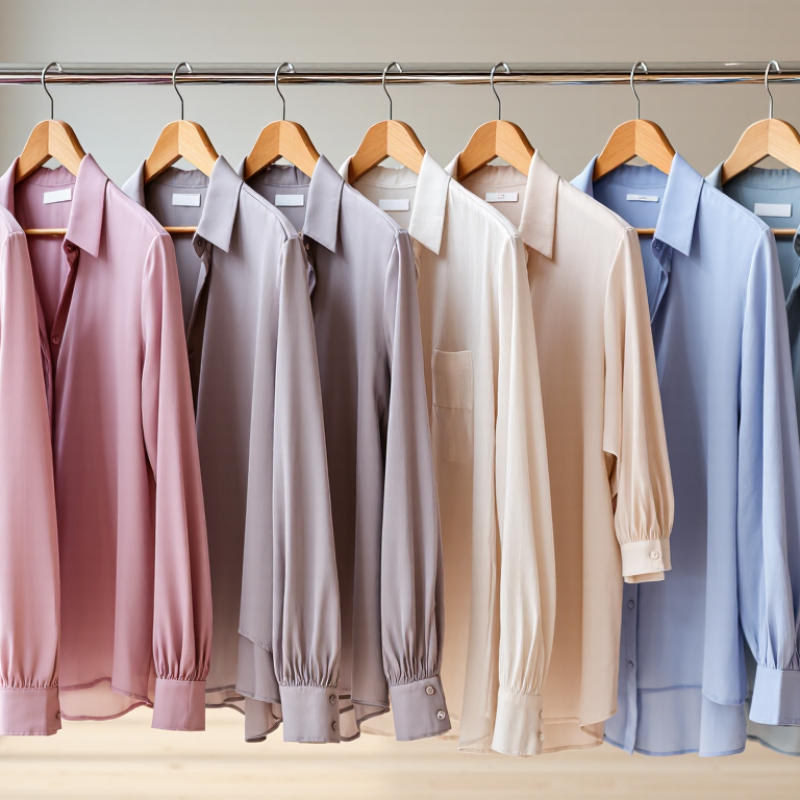
Women’s chiffon shirts are lightweight woven tops made from sheer, fine yarns. Chiffon usually uses polyester, silk, or blended fibers. It feels airy and creates a soft, fluid drape. The fabric can also wrinkle, snag, or show transparency under strong light. That matters in wholesale buying.
Textile Exchange’s Materials Market Report 2024 estimates global fiber production reached 124 million tonnes in 2023. Polyester represented about 57% of that volume. This helps explain why polyester chiffon is common in large-volume purchasing. It offers consistent color, lower unit costs, and simpler care than silk. However, buyers should request fabric weight, composition, shrinkage, and colorfastness data. A smooth sample can still perform poorly after washing.
Wholesale applications include boutique collections, occasionwear capsules, office layering, and seasonal fashion programs. Buyers can use relaxed silhouettes for warm climates and lined versions for modest retail displays. Practical checks include sleeve recovery, seam strength, button security, and size consistency. A 2025 fashion industry outlook from McKinsey describes continued low single-digit market growth, making inventory discipline important. Chiffon shirts can support variety without excessive fabric weight. Still, too many colors may create slow-moving stock. A smaller color range is often safer, though not always more attractive. Ask for pre-production samples, carton measurements, and clear minimum-order terms before confirming bulk quantities.
A practical wholesale reference for evaluating women’s chiffon shirts by fabric, design, performance, and application.
| Evaluation Dimension | Typical Specification or Fact | Wholesale Benefit | Common Application |
|---|---|---|---|
| Definition | A lightweight woven fabric made from fine filament yarns, commonly polyester, nylon, silk, or blended fibers. | Provides a broad product category suitable for different price points and market segments. | Women’s tops, occasionwear, officewear, layering pieces, and fashion collections. |
| Fabric Weight | Often approximately 40–100 g/m², depending on yarn type, weave, and finishing. | Lower fabric consumption can support lightweight shipping and flexible seasonal assortments. | Spring and summer ranges, travel clothing, resortwear, and transitional outfits. |
| Hand Feel | Smooth, soft, airy, and fluid; the exact feel varies with fiber content and finishing. | Creates a refined appearance while remaining comfortable for everyday wear. | Boutique blouses, feminine workwear, evening tops, and elevated casualwear. |
| Breathability | The open, lightweight construction generally allows good air movement, although lining and garment design affect performance. | Supports warm-weather merchandising and improves comfort in lightweight styles. | Summer tops, humid-climate collections, and vacation apparel. |
| Transparency | Usually semi-sheer to sheer; opacity depends on color, fabric density, lining, and garment layers. | Allows varied styling, but product specifications should clearly state lining or layering requirements. | Layered blouses, camisole-style tops, sleeves, overlays, and occasionwear. |
| Drape | Generally fluid with soft movement; drape varies according to fabric weight and yarn construction. | Enhances visual appeal and helps create relaxed, elegant silhouettes. | Relaxed-fit shirts, peplum tops, tie-front styles, and draped sleeves. |
| Wrinkle Behavior | Many synthetic chiffon fabrics resist wrinkles better than natural silk, but creasing can still occur during packing. | Can reduce presentation issues during storage and transportation when properly packed. | E-commerce shipments, travel collections, uniform separates, and ready-to-wear assortments. |
| Color and Printing | Available in solid colors, printed patterns, gradients, and digital or screen-printed designs, subject to fiber and finishing compatibility. | Supports broad color ranges and frequent seasonal design updates. | Floral collections, geometric prints, festive capsules, and trend-led drops. |
| Construction Requirements | Fine needles, suitable thread, careful seam finishing, and controlled handling are recommended to reduce snagging and puckering. | Consistent production standards help reduce defects and improve repeat-order reliability. | Bulk private-label production, uniform collections, and multi-style wholesale programs. |
| Care Considerations | Care instructions vary; many polyester chiffon garments are machine washable on a gentle cycle, while silk chiffon commonly requires more delicate care. | Clear care labeling helps reduce customer complaints and supports accurate product positioning. | Retail apparel, online catalogs, subscription boxes, and occasionwear programs. |
| Sizing Strategy | Relaxed silhouettes and flowing cuts can accommodate a range of body shapes, but measurement charts remain essential. | Flexible fits may support wider market coverage and simplified assortment planning. | Inclusive collections, loose-fit programs, maternity-inspired styles, and layered outfits. |
| Wholesale Suitability | Lightweight construction, design versatility, and compatibility with solid or printed styles make chiffon shirts suitable for different retail channels. | Enables assortment diversification across price levels, seasons, and customer preferences. | Department stores, boutiques, online retailers, uniform suppliers, and fashion distributors. |
Note: Specifications are typical industry ranges and may vary by fiber content, fabric construction, finishing process, garment design, and supplier quality standards.
McKinsey forecasted 2–4% fashion growth in 2024, signaling cautious but real market movement. This outlook supports practical wholesale decisions, not blind optimism. Women’s chiffon shirts fit this environment because they offer light texture, easy layering, and broad seasonal use.
A soft blouse can move from office wear to evening styling with simple accessories. That flexibility may help retailers manage different customer preferences. Still, growth forecasts are not guarantees. Local demand, pricing pressure, and unsold stock can change the result quickly.
Tips: Test small quantities first. Compare fabric weight, stitching, colorfastness, and sleeve shape. Ask suppliers for clear measurements and sample photos. Pale chiffon may need lining, especially under strong store lighting. Small details matter.
Wholesale buyers should study repeat orders rather than chase one impressive sales week. Neutral shades often provide stability, while selected seasonal colors create visual interest. Transparent supplier communication also supports reliability, especially when discussing lead times and defect handling.
My practical concern is simple: attractive chiffon can disappoint if it wrinkles easily or feels too sheer. Request samples before committing to large volumes. Review customer feedback after each delivery. The 2–4% growth estimate offers useful context, but careful testing turns market evidence into a workable buying plan.
Polyester accounted for 57% of global fiber production in 2023, according to Textile Exchange’s Materials Market Report 2024. The report places total fiber output at about 124 million tonnes. For wholesale buyers, this scale matters. It supports broad yarn availability and more predictable fabric sourcing. Polyester chiffon is lightweight, fluid, and usually easier to maintain than many delicate alternatives. That balance suits blouses, scarves, occasionwear, and layered shirts.
Cost, however, is not the whole calculation. Large-scale polyester supply can help mills quote stable prices for repeat orders. Buyers should still test opacity, snag resistance, seam behavior, and colorfastness before committing. Small swatches reveal problems. Ask for fabric weight, yarn details, finishing methods, and test results. These documents strengthen supplier evaluation and reduce avoidable claims.
Textile Exchange also reports that less than 1% of global fiber production came from recycled textiles in 2023. That gap deserves attention. Lower price does not automatically mean lower environmental impact. Polyester is largely fossil-based, and washing can release synthetic fibers. Yet rejecting it entirely may ignore durability, return waste, and volume manufacturing realities. Responsible wholesale decisions need both performance evidence and clearer environmental questions.
Women’s chiffon shirts can be attractive wholesale products because they feel light, drape well, and suit several seasonal collections. However, the fabric’s appearance can hide sourcing risks. Textile Exchange’s 2024 Materials Market Report recorded 124 million tonnes of global fiber production in 2023, with polyester representing 57%. This supports polyester chiffon as a widely available option, but availability does not guarantee consistent quality.
MOQ should match your sales forecast, not only the factory’s offer. A low MOQ may reduce inventory pressure, yet its unit cost is often higher. For chiffon, request the GSM before comparing prices. Around 60–90 GSM can create a soft, airy shirt, while a heavier construction may reduce transparency and improve durability. GSM alone is not enough. We also check seam slippage, colorfastness, and shrinkage after washing.
Lead time needs practical space. A common production window may range from 25 to 45 days after approval, excluding fabric delays and shipping. Unit cost should include sampling, labels, packing, inspection, and possible rework. The International Trade Centre’s textile and apparel studies emphasize supply-chain transparency and reliable production information for sourcing decisions. I would not choose the cheapest quote immediately. The first sample can still disappoint. A better evaluation compares landed cost, realistic MOQ, tested GSM, and confirmed delivery dates. Small errors here become expensive when multiplied across hundreds of shirts.
Wholesale evaluation comparing minimum order quantity, fabric weight, production lead time, and estimated unit cost across common purchasing volumes.
Larger orders generally reduce the estimated unit cost but may require higher minimum quantities and longer production schedules. The GSM range shown is typical for lightweight to medium-weight polyester chiffon shirts. Values are representative non-brand wholesale benchmarks; actual quotations vary by fabric composition, customization, finishing, and destination.
Wholesale women’s chiffon shirts require more than attractive colors and low prices. The fabric should feel light, but seams must remain secure after handling. AQL inspections can check stitching, measurements, shade variation, stains, loose threads, and damaged buttons. An agreed sampling plan matters. AQL is not a guarantee of perfection.
REACH compliance deserves careful attention, especially for dyes, prints, metal trims, and finishing agents. Request recent laboratory reports from reliable suppliers, then confirm that the tested materials match the production order. Labels should show accurate fiber content, care instructions, size information, and required origin details. These requirements can vary by sales market, so local verification remains necessary. Small label errors can delay deliveries or confuse customers.
Sustainability checks should examine more than recycled-fabric claims. Ask about fiber sources, wastewater management, packaging reduction, and production traceability. Certifications can help, but documents should be current and verifiable. During pre-shipment checks, inspect shirts under both indoor and natural light. Chiffon may reveal uneven color or transparency only from certain angles. No checklist catches everything. Human judgment still matters, and some inspection habits need regular review. A low defect rate is valuable, but honest records are even more useful for improving future wholesale orders.
Match the MOQ with your sales forecast, not only the supplier’s preferred quantity. A smaller MOQ reduces inventory pressure but may increase the unit cost. Small batches can still create storage problems.
Around 60–90 GSM usually creates a soft, airy shirt. Heavier fabric can reduce transparency and improve durability. GSM alone is not enough.
Request tests for seam slippage, colorfastness, and shrinkage after washing. Also inspect transparency under different lighting angles. A sample may look perfect indoors.
Production may take 25–45 days after sample approval. This estimate excludes fabric delays and shipping time. Allow extra schedule space.
Include sampling, labels, packaging, inspection, and possible rework. Compare the landed cost instead of reviewing the factory price alone. Cheap quotes can become expensive later.
An inspection can review stitching, measurements, stains, loose threads, buttons, and shade differences. Use an agreed sampling plan before production begins. AQL does not guarantee perfection.
Labels should show accurate fiber content, care instructions, sizing, and required origin information. Requirements may differ between sales markets. Local verification remains necessary.
Check fiber sources, wastewater management, packaging reduction, and production traceability. Ask for current, verifiable documents rather than relying on recycled-fabric claims. Some checks need improvement.
Inspect shirts under indoor and natural light. Look for uneven color, unexpected transparency, weak seams, and measurement errors. Human judgment still matters.
Women Chiffon Shirts are a versatile wholesale option for retailers seeking lightweight, elegant, and adaptable apparel. Made from soft, semi-sheer chiffon, these shirts offer breathability, fluid drape, and a polished appearance suitable for workwear, casual styling, and occasion dressing. With fashion industry growth forecast at approximately 2–4% in 2024, chiffon shirts can support seasonal collections and varied customer preferences. Polyester, which represented about 57% of global fiber output in 2023, is commonly used because it provides durability, color retention, wrinkle resistance, and cost efficiency.
For wholesale purchasing, buyers should compare minimum order quantity, fabric weight measured in GSM, production lead time, and unit cost. A balanced evaluation helps ensure reliable margins without sacrificing quality. Quality checks should include consistent stitching, colorfastness, fabric performance, and an appropriate AQL standard. Buyers should also verify REACH-related chemical safety, accurate fiber-content and care labels, packaging details, and sustainability practices. These factors help create a dependable, compliant, and commercially attractive chiffon shirt collection.