Premier Heavyweight Streetwear & Blank T-Shirt Collection
Precision-engineered knitted garments designed for high-density screen printing, digital direct-to-garment (DTG), and custom private label rebranding.
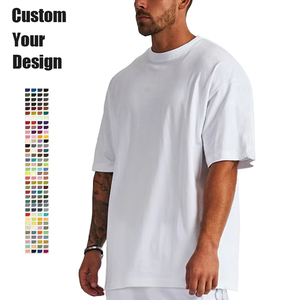
Oversized Drop Shoulder Heavyweight White T-Shirt
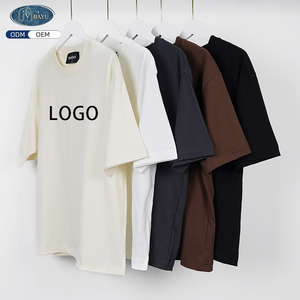
220GSM Unisex Premium Cotton O-Neck T-Shirt
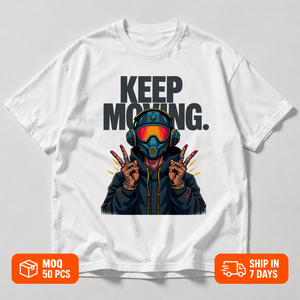
Hip Hop Street-Style Heavyweight Custom Graphic Tee
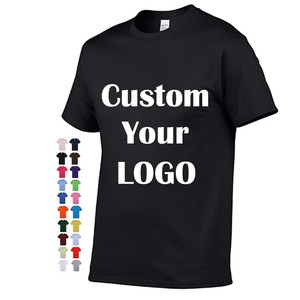
Classic Black Plus Size Cotton Brand Logo T-Shirt
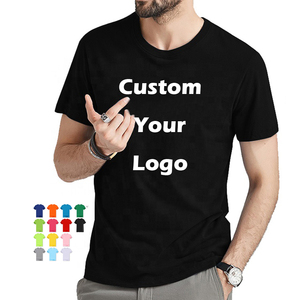
Polyester-Cotton Poly-Cotton Blend Athletic Blank Tee
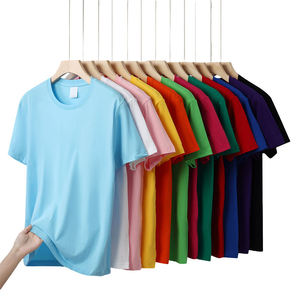
Standard 180GSM Plain Blank Streetwear T-Shirt
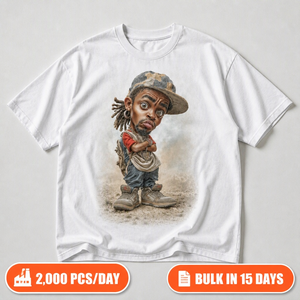
Acid Wash Vintage Heavyweight Custom Graphic Tee
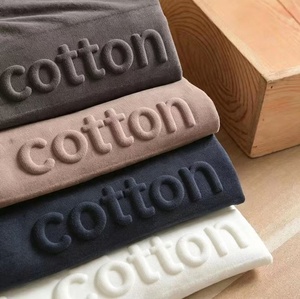
3D Embossed Graphic Heavyweight Streetwear Tee
Strategic ODM Apparel Manufacturing: Navigating China's Supply Chain Architecture
In the contemporary global apparel economy, the transition from traditional Contract Manufacturing (OEM) to Original Design Manufacturing (ODM) represents a pivotal strategic evolution for fashion brands, retail conglomerates, and institutional workwear procurement officers. China’s supply chain infrastructure has matured far beyond basic Cut-Make-Trim (CMT) assembly line processes. Today, top-tier Chinese ODM manufacturers function as complete product innovation hubs—integrating advanced textile engineering, automated CAD pattern drafting, bio-synthetic fiber formulation, and agile supply chain logistics into a single turnkey ecosystem.
For international procurement directors, partnering with a sophisticated China ODM clothing supplier unlocks structural cost advantages alongside immense technical depth. OEM models demand that brands possess fully realized technical packs, finalized bill-of-materials (BOM) documentation, and granular fabric specifications prior to factory engagement. Conversely, an experienced ODM partner bridges the gap between creative directional concepts and mass-market production readiness. By leveraging pre-costed pattern libraries, verified textile performance benchmarks, and automated digital prototyping, ODM manufacturing reduces product development cycles from the traditional 120-day industry baseline down to under 21 days from initial render to pre-production sample (PPS) sign-off.
SEO Information Gain Insight: The modern ODM model in China eliminates up to 35% of front-end research & development overhead for commercial fashion brands by deploying modular garment frameworks—enabling rapid customization of yarn GSM, collar rib densities, and ergonomic fit blocks without incurring bespoke pattern setup delays.
Full-Spectrum ODM Customization & Private Label Rigor
Our manufacturing matrix operates under strict industrial compliance guidelines, transforming raw greige goods into retail-ready apparel through rigorously audited supply chains. We cater to fast-scaling DTC brands, established retail chains, and corporate uniform distributors alike.
- Low MOQ Entry Tiers starting from 50–150 pieces per style
- Comprehensive OEKO-TEX Standard 100 & BSCI Certified Facilities
- In-House Dye House with Automated Lab-Dip Color Matching
- Integrated GS1 Barcoding, Woven Neck Labels & Custom Packaging

Future Apparel Sourcing & Procurement Trends (2025–2030)
Global apparel procurement is undergoing a paradigm shift driven by digital integration, regulatory compliance, and volatile consumer demand cycles. Brands can no longer rely on rigid, annual bulk ordering models that lock up millions in working capital while risking mass markdowns. Modern procurement strategies are anchored in three core trends:
1. Micro-Batch Production with Quick-Response (QR) Replenishment
The traditional 1,000-piece minimum order quantity (MOQ) barrier is rapidly dissolving. Forward-thinking Chinese ODM suppliers now utilize modular cutting tables and digital direct-to-film (DTF) or screen-printing carousels to support agile production runs starting at just 50 to 150 units. This allows apparel lines to deploy "test-and-repeat" inventory models: releasing small seasonal test capsules, reading real-time sell-through velocity via e-commerce analytics, and executing automated bulk re-orders that ship via expedited air freight within 12 to 14 days.
2. Mandatory Digital Product Passports (DPP) & Traceability
With impending legislation across the European Union (such as the EU Ecodesign for Sustainable Products Regulation) and North America, supply chain transparency has shifted from a marketing luxury to a legal prerequisite. Leading ODM clothing manufacturers in China are incorporating blockchain-enabled fabric tracking systems. From raw GOTS-certified organic cotton baling to spinning, weaving, non-toxic reactive dyeing, and garment assembly, every tier of the supply chain generates auditable data points that populate consumer-facing QR codes on garment wash tags.
3. Structural Demand for Heavyweight & Technical Streetwear Fabrics
Consumer preferences in casualwear and streetwear have permanently migrated toward high-GSM (grams per square meter) fabrications. Lightweight 140–160 GSM single jersey fabrics are increasingly relegated to budget undershirts, while premium streetwear brands demand 220 GSM, 280 GSM, and even 350+ GSM French Terry and heavy jersey textiles. ODM suppliers must possess specialized circular knitting machinery capable of feeding coarse 20s/1 and 16s/1 combed cotton yarns without introducing structural torque or skewing post-wash.
Agile Inventory Engineering
Mitigate stockout risks and over-production write-offs by utilizing our 50-piece low-MOQ test run framework before scaling to container-load orders.
Full Traceability Compliance
Every lot is backed by verified OEKO-TEX, GOTS, and BSCI audit certificates, ensuring seamless compliance across Western customs borders.
Advanced Textile R&D
Proprietary fabric treatments including bio-wash anti-pilling, reactive garment dyeing, acid wash distressing, and 3D silicone embossing.
Apparel Development Trends: Material Science & Construction Innovations
Achieving market distinction in competitive apparel niches requires a deep understanding of textile physics, yarn selection, and garment finishing protocols. As an industry-leading Chinese ODM apparel supplier, our engineering laboratories focus heavily on material innovation across several critical vectors:
Combed vs. Carded Cotton Yarn Selection
The foundation of premium garment manufacturing lies in fiber length and alignment. Cheap mass-market tees utilize short-staple carded cotton yarns (typically 20s/1 or 24s/1), which contain uneven fiber distribution leading to surface fuzz, high pilling rates, and severe shrinkage post-wash. In contrast, our ODM manufacturing standard utilizes 100% long-staple combed cotton (such as Xinjiang or Supima cotton) spun into 32s/2 or 40s/2 fine gauge yarns. This process strips away short, weak fibers, yielding an exceptionally smooth surface optimized for high-resolution DTG printing and long-term dimensional stability.
Bio-Enzyme Washing & Reactive Dyeing Dynamics
To achieve the coveted soft hand-feel demanded by modern consumer brands, fabrics undergo specialized wet-processing treatments. Bio-enzyme washing utilizes natural cellulase enzymes to digest micro-fibrils on the yarn surface, permanently neutralizing surface pilling without damaging the structural core of the cotton fiber. Furthermore, our dye houses execute 100% reactive dyeing—a chemical process where dye molecules form covalent bonds with the cellulose fibers. This guarantees Grade 4.5 color fastness against washing, light exposure, and perspiration, eliminating the bleeding issues common in budget direct-dyed apparel.
Reinforced Structural Ergonomics
A major flaw in off-the-shelf catalog apparel is structural degradation after repeated laundering. Our ODM pattern engineering integrates heavy-duty construction standards: shoulder-to-shoulder internal neck taping, 1x1 or 2x1 high-density cotton-spandex ribbing with shape memory recovery, and double-needle cover-stitching on sleeve cuffs and bottom hems. For drop-shoulder and oversized streetwear cuts, shoulder seams are pitched forward by 1.5 cm and reinforced with internal clear TPU tape to prevent seam sagging under the weight of heavy 280+ GSM fabrics.
Technical Specification & Manufacturing Benchmark Matrix
Compare the operational and technical capabilities of standard Contract OEMs against our Advanced China ODM Manufacturing Infrastructure:
| Technical Parameter | Standard OEM Supplier | China Top ODM Manufacturing Partner |
|---|---|---|
| Minimum Order Quantity (MOQ) | 1,000 - 3,000 pcs per style / color | 50 - 150 pcs (Agile Low-MOQ Tier) |
| Tech Pack & Pattern Development | Client must provide complete tech pack | In-House ODM Drafting from photos/sketches |
| Pre-Production Sample (PPS) Lead Time | 21 - 35 Working Days | 7 - 10 Working Days (Express 5-day option) |
| Bulk Production Turnaround | 45 - 60 Days | 12 - 18 Days (Blanks) / 25-35 Days (Custom) |
| Quality Assurance Standard | AQL 4.0 or Visual Spot Check | Strict AQL 2.5 Major / 1.0 Minor Zero-Defect Inspection |
| Social & Environmental Audits | Uncertified or Local Sub-Contracted | BSCI, OEKO-TEX 100, ISO 9001, SA8000, Disney FAMA |
| Logistics & Fulfillment Support | FOB Port Only (Freight arranging required) | Full DDP / FOB / CIF Door-to-Door Courier, Sea & Air |
Enterprise Strengths: 20+ Years of Manufacturing Authority
With over two decades of dedicated garment manufacturing expertise, our facility network stands as a pillar of reliability for international fashion houses, promotional supply chains, and specialized workwear brands. Anchored by strategic front-end operational offices in 7 countries and backed by 9 state-of-the-art production facilities, our backend infrastructure empowers over 5,000 brands globally.
Our complete private label solutions remove every operational bottleneck from the clothing production equation. Whether you require custom-woven main labels, high-density screen printing, 3D silicone embossing, custom-dyed pantone matching, or specialized wash finishes (such as acid wash, mineral wash, or vintage enzyme distressing), our master tailors and chemical technicians deliver flawless consistency across every production run.
Sustainability Commitment: We actively champion circular textile ecosystems. Our sustainable fabric division specializes in Global Recycled Standard (GRS) certified recycled polyester (derived from post-consumer PET bottles), GOTS-certified organic cotton, and TENCEL™ Lyocell blends, lowering carbon footprint and water consumption by up to 45% per garment produced.
Frequently Asked Procurement & ODM Manufacturing Questions
Find authoritative technical answers to common questions encountered by apparel buyers, sourcing agents, and brand founders when contracting ODM apparel manufacturing in China.
Our low-MOQ program is specifically structured to support growing brands. In-stock blank garments (ready for local printing/embroidery) start at 50 pieces per style. Custom cut-and-sew ODM development starts at 100 pieces per colorway, while full private label programs (including custom woven labels, hangtags, and bespoke packaging) start at 150 pieces per style.
Pre-production physical samples are delivered within 7 to 10 working days following tech pack approval. Bulk manufacturing of blank stock takes 12 to 18 working days. Fully custom cut-and-sew orders, custom dyeing, or specialized washes take 25 to 35 working days. Air shipping takes 4 to 7 days, while ocean freight takes 18 to 35 days depending on destination port.
No. As a full-service ODM manufacturer, our internal pattern-making team can generate professional digital tech packs from physical reference garments, high-resolution photographs, CAD drawings, or even simple vector sketches. We will grade size charts from XS to 6XL to match your target region's anatomical specifications.
We execute rigorous AQL 2.5 inspection standards across four distinct phases: 1) Incoming Raw Fabric & Trims Inspection, 2) In-Line Sewing & Measurement Tolerance Verification every 30 pieces, 3) 100% Needle Detection and Thread Trimming, and 4) Final Pre-Shipment Carton Packaging Audits. Third-party inspection agency visits (SGS, Intertek, TUV) are fully welcomed.
We manufacture across a wide spectrum of textile weight profiles: lightweight poplins (110–140 GSM), mid-weight t-shirt single jerseys (180–220 GSM), heavyweight streetwear jerseys (240–300 GSM), and ultra-heavy French Terry or fleece (350–500 GSM). Available compositions include 100% Combed Ring-Spun Cotton, CVC Blends, Recycled Polyester, Bamboo Viscose, Linen, and GOTS Organic Cotton.
We offer comprehensive global shipping options including EXW, FOB, CIF, and DDP (Delivered Duty Paid). Under DDP terms, our logistics partners manage all export customs clearance, international freight forwarding, import tariffs, duties, and local final-mile truck delivery straight to your warehouse door—eliminating import complexities for your brand.
Partner with China's Leading ODM Clothing Manufacturer Today
Transform your apparel concepts into market-ready, high-yield product lines. Contact our Senior Merchandising Executives to receive a instant quote, fabric swatch kit, or tech pack audit.