Verified Wholesale & OEM Denim Shirt Catalog
Explore our curated selection of high-grade denim shirts, workwear overshirts, and custom street fashion pieces engineered for global apparel brands, distributors, and retail chains.
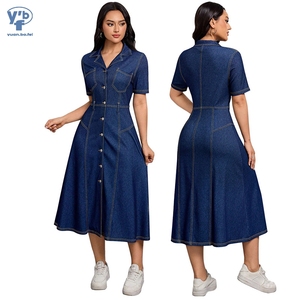
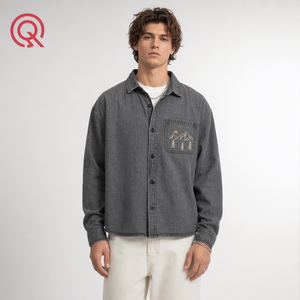
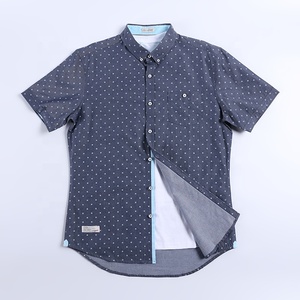
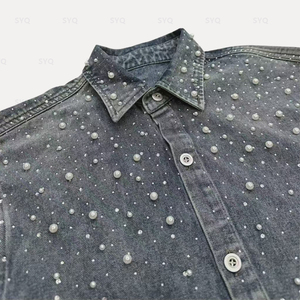
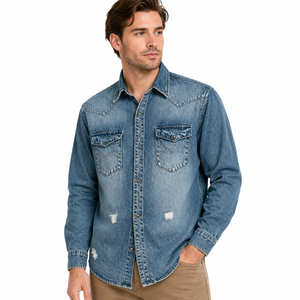
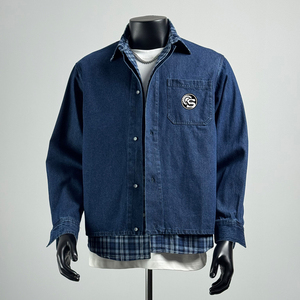
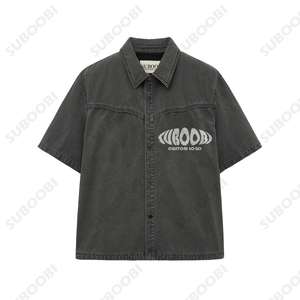
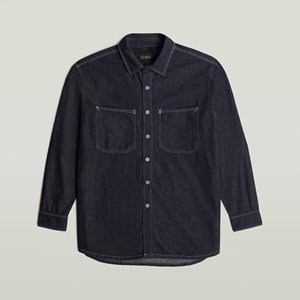
1. Executive Summary & Sourcing Intelligence for Denim Shirt Manufacturing
Navigating the global supply chain for high-quality denim shirt manufacturing demands a sophisticated understanding of textile engineering, wet-processing sustainability, and flexible order architecture. As brands face tightening environmental regulations, shifting consumer preferences toward workwear aesthetics, and erratic demand patterns, partnering with certified, top-tier denim shirt manufacturers is no longer just an operational decision—it is a core strategic advantage.
Modern denim shirt production has evolved far beyond basic cotton indigo weaving. Today's apparel landscape requires precision cut-and-sew operations capable of executing complex wash treatments (stone wash, enzyme bleach, laser distressing, and ozone fading) while maintaining strict dimensional stability and tensile strength. Sourcing managers must evaluate suppliers not only on FOB unit costs, but on technical compliance, environmental certifications (such as OEKO-TEX Standard 100, BSCI, and GOTS), pattern grading precision, and lead-time agility.
2. Technical Specifications & Material Engineering Standards
Denim shirts occupy a unique space in apparel manufacturing, spanning lightweight 4.5 oz chambray shirting to heavy 12 oz utility workwear overshirts. Choosing the correct fabric construction, yarn structure, and dye technique dictates the end-product's hand-feel, longevity, and retail positioning.
Fabric Weight (GSM & Ounces) Breakdown
- Lightweight Denim (4.5 oz – 6.5 oz / 150 – 220 GSM): Ideal for spring/summer button-downs, western-style fashion shirts, and fluid women’s shirt dresses. Typically woven with 30s or 40s singles combed cotton or TENCEL™ blends for soft drape.
- Midweight Denim (7.0 oz – 9.5 oz / 235 – 320 GSM): The industry benchmark for classic year-round denim shirts, button-down casuals, and vintage stone-washed street apparel. Offers structural integrity while allowing comfortable movement.
- Heavyweight Utility Overshirts (10.0 oz – 12.0 oz / 340 – 400 GSM): Engineered for rugged workwear, chore jackets, and autumn layering overshirts. Constructed using coarse 10s or 12s ring-spun yarn with reinforced double or triple-needle flat-felled seams.
Yarn Selection & Indigo Dyeing Protocols
Superior denim shirt suppliers leverage ring-spun cotton over open-end spun yarns to enhance surface texture and tear resistance. Slub yarns are strategically integrated to achieve authentic slubby vintage character after wash treatments. For colorfastness and fading characteristics, rope-dyeing remains the gold standard, applying 6 to 8 dips of pure synthetic or organic indigo dye to ensure deep dye penetration with a bright white yarn core—essential for high-contrast whiskers and laser engraving.
3. Enterprise Manufacturing Capabilities & Factory Benchmarks
Our manufacturing infrastructure, built over two decades as a flagship global supplier (operating under audited guidelines such as BSCI, OEKO-TEX, SA8000, and ISO 9001), provides brand owners with end-to-end operational security. We bridge the gap between low-MOQ startup flexibility and high-volume enterprise scalability.
Low-MOQ Agility
Flexible production starting at 50 pieces for blank stock and 100–150 pieces for full custom cut-and-sew private label programs, minimizing inventory risk.
Audited Compliance
Factory units audited under BSCI, OEKO-TEX Standard 100, SA8000, ISO 9001, and Walt Disney FAMA standards, providing complete social and ethical safety.
Global Logistics (55+ Countries)
Seamless door-to-door (DDP), FOB, and CIF logistics backed by local front-end offices across the US, UK, Australia, UAE, and Qatar.
Advanced Wet & Dry Processing
State-of-the-art wash labs executing ozone bleaching, waterless laser distressing, bio-enzyme washes, and eco-friendly stone washing techniques.
Full Private Label Package
Custom woven main labels, engraved snap buttons, leather back patches, printed care labels, hangtags, and custom barcoded polybags.
Closed-Loop Sustainability
Integration of GOTS-certified organic cotton, GRS recycled denim fibres, and water-recycling Effluent Treatment Plants (ETP).
4. B2B Vendor Comparison Matrix
To assist procurement officers and apparel brand founders in vendor evaluation, the following matrix benchmarks our manufacturing standards against conventional wholesale suppliers.
| Evaluation Benchmark | Our Manufacturing Infrastructure | Generic / Traditional Suppliers |
|---|---|---|
| Minimum Order Quantity (MOQ) | 50 pcs (Blanks) / 100-150 pcs (Custom Cut-and-Sew) | 500 – 1,000 pcs per colorway |
| Shrinkage Control Protocol | Pre-wash lab sizing recalculation + 3D CAD pattern adjust | Standard sizing with 5-10% post-wash variance |
| Wash & Finishing Technology | Ozone, Waterless Laser, Eco-Enzyme, Low-Liquor Dyes | High-water conventional chemical stone washing |
| Quality Assurance Standard | AQL 2.5 Strict Inspection + Metal Detection Sweep | Basic spot-check internal review |
| Social & Environmental Audits | BSCI, OEKO-TEX 100, ISO 9001, SA8000, Disney FAMA | Uncertified or self-declared documentation |
| Custom Hardware & Trims | Custom Pearl Snaps, Embossed Leather Patches, Rivets | Standard off-the-shelf unbranded trim buttons |
5. Future Denim Shirt Procurement & Global Trends (2025–2030)
The global denim shirt market is undergoing a structural transformation driven by legislative ESG requirements, consumer demand for vintage workwear silhouettes, and technological breakthroughs in digital supply chain integration. Forward-thinking procurement teams must adapt to several emerging macroeconomic and technical trends over the coming decade.
A. Transition to Waterless & Low-Impact Finishing (Zero-Liquid Discharge)
Traditional denim washing requires upwards of 70 to 100 liters of water per garment. Legislative mandates across the European Union and North America are accelerating the adoption of laser-engraving technologies (which replace manual sandblasting and potassium permanganate spray) and gas-phase ozone washing. Ozone processing neutralizes residual indigo dye using atmospheric oxygen, reducing water usage by over 80% while creating authentic sun-faded aesthetics without degrading fabric tensile strength.
B. Circularity & Next-Gen Fibre Blends
Post-consumer recycled cotton (PCR) and pre-consumer textile waste are becoming standard raw inputs. Modern yarn spinning technology now allows blending up to 30% recycled denim fibres with long-staple virgin organic cotton without compromising seam strength or tear resistance. Furthermore, the integration of TENCEL™ Lyocell and hemp fibres delivers superior moisture management, antibacterial performance, and a silk-like softness that caters to the premium casual dress market.
C. Smart Tech-Pack Digitization & 3D Virtual Sampling
Physical sampling iterations historically added 4 to 6 weeks to product development cycles. Future-ready manufacturers utilize 3D cloth simulation engines (such as CLO3D and Browzwear) to map fabric drape, wash gradients, and fit tension digitally. Brands can review photorealistic digital twin samples, approve pattern modifications in real-time, and proceed directly to pre-production sampling, slashing go-to-market lead times by up to 50%.
D. Heavyweight Workwear & Modern Utility Styles
Streetwear aesthetics continue to merge with classic American workwear. Oversized, boxy denim shirts featuring dropped shoulders, double-layer construction, raw hem accents, and false two-piece plaid linings (such as our vintage-washed double-layer models) are outperforming slim-fit traditional dress shirts in retail sell-through rates.
6. Frequently Asked Questions (FAQ) for Denim Shirt Procurement
Detailed technical and operational answers to common procurement, development, and logistics questions.
Our minimum order quantity is engineered to support both scaling startups and enterprise brands. Unbranded blank stock programs start at 50 pieces per style. Custom-developed styles (featuring specific pantone washes, custom fits, or screen/digital prints) start at 100 pieces per colorway. Full private label programs incorporating custom-cast hardware buttons, woven labels, leather patches, and barcoded retail packaging start at 150 pieces.
Denim wet processing introduces significant fabric movement. To combat dimensional distortion, we conduct rigorous pre-production lab wash tests on every raw fabric batch to determine exact warp and weft shrinkage ratios. Our CAD pattern makers automatically expand the cutting templates by the corresponding percentages (e.g., +6% length, +4% width) prior to cutting. Post-wash garments are then pressed on specialized anatomical steam forms to match your exact size specification sheet within a tight ±0.5-inch tolerance.
We provide rapid pre-production prototype sampling. Once tech packs or reference garments are submitted, digital CAD patterns and wash strike-offs are completed within 3 to 5 business days. Physical fit and wash samples are produced and dispatched within 7 to 10 working days. Bulk production lead times average 12 to 18 working days for blank stock decoration and 25 to 35 working days for full custom cut-and-sew orders.
Absolutely. We specialize in low-impact denim manufacturing. Buyers can specify GOTS-certified organic cotton, GRS recycled cotton, or TENCEL™ blends. Our wet processing facilities utilize zero-discharge water recycling systems, ozone bleaching, bio-enzyme washing, and waterless laser distressing that conform to strict ZDHC (Zero Discharge of Hazardous Chemicals) and OEKO-TEX Standard 100 parameters.
Production follows a 4-stage quality control workflow: 1) Incoming raw fabric and trim inspection via 4-Point System, 2) In-line sewing assembly checks every 30 units, 3) 100% post-wash dimensional and visual defect auditing, and 4) Final AQL 2.5 statistical sampling inspection prior to packing. Every carton undergoes needle-detection sweeping to guarantee retail-ready safety compliance.
We ship to over 55 countries using FOB, CIF, and DDP (Delivered Duty Paid) terms. Our logistics team handles full customs clearance, import documentation, duty tariff calculations, and direct-to-warehouse delivery via ocean freight, air cargo, or express courier services. Front-end regional offices in the USA, UK, Australia, UAE, and Qatar provide localized customer service in your time zone.
Ready to Scale Your Denim Shirt Collection?
Partner with a top trusted global manufacturer. Connect with our senior apparel merchandisers today for tech pack reviews, instant fabric price breakdowns, and sample development.
Get a Quote