1. Strategic Overview: Navigating New York's High-Velocity Denim Ecosystem
The New York apparel market represents one of the world's most intricate and demanding fashion landscapes. From the fast-paced retail storefronts of Fifth Avenue and Broadway in SoHo to independent boutique houses in Williamsburg and Greenpoint, procurement managers face a unique dual pressure: uncompromising construction quality paired with rapid replenishment cycles. As consumer expectations shift toward multi-functional wardrobing, the denim shirt has evolved from traditional American workwear into a cornerstone item spanning contemporary menswear, gender-fluid casual wear, and luxury streetwear.
Sourcing denim shirts for New York distribution requires an in-depth technical understanding of fabric weights, wet-processing chemistry, shrinkage tolerances, and duty compliance. Unlike standard cotton dress shirts, denim shirt manufacturing involves complex post-assembly washes—such as enzyme washing, stone washing, ozone treatment, and laser distressing—that fundamentally alter garment dimensions, seam strength, and hand-feel. Overseas exporters seeking to capture market share in New York must demonstrate proven compliance with international social audits, transparent supply chain documentation, and flexible minimum order quantities (MOQ) that accommodate both high-volume department store orders and limited-run boutique drops.
Procurement Directive for NY Apparel Directors
In the 2025–2026 purchasing cycle, successful New York buyers are prioritizing exporters that offer fully integrated cut-and-sew solutions alongside low-impact washing technologies (such as E-Flow and laser treatment) to align with New York State’s tightening environmental guidelines and consumer demand for circular fashion.
2. Comparative Analysis: Top 10 Denim Shirt Exporter Models Servicing NY
To establish strategic competitive advantage, procurement officers must evaluate export partners based on manufacturing capability, auditing certifications, pattern customization, and East Coast logistics efficiency. Below is an analytical framework categorizing the top exporting business models supplying the New York garment market:
| Exporter Tier & Model |
Primary Product Specialization |
Typical MOQ Tiers |
Key Washing Capabilities |
NY Port Lead Time (DDP) |
| Tier 1: Vertically Integrated Global Manufacturers (e.g., Oasis Shirts Network) |
Custom Private Label, OEM/ODM Denim Overshirts, Lightweight Chambrays |
50 – 150 Pcs per style |
Enzyme, Ozone Bleach, Laser Fading, Resin Coating |
12 – 18 Days (Air) / 25 – 30 Days (Sea) |
| Tier 2: Mass Commodity Exporters (South/East Asia) |
Basic Heavyweight Workwear Denim Shirts, Uniform Apparel |
1,000 – 3,000 Pcs per color |
Basic Stone Wash, Conventional Pumice Wash |
35 – 45 Days (Sea Freight) |
| Tier 3: Boutique Artisan Mills (Euro/Japan Exporters) |
Selvedge Denim Shirts, Hand-Distressed Craft Pieces |
300 – 500 Pcs |
Natural Indigo Dip, Hand-Sanding, Vintage Tinting |
20 – 25 Days (Air Cargo) |
| Tier 4: Fast-Fashion Private Label Trading Houses |
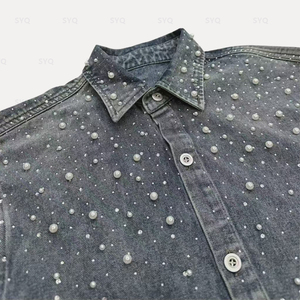
Trendy Cropped Shirts, Printed & Embellished Denim |
200 – 500 Pcs |
Synthetic Bleach, Acid Wash, Pigment Dyeing |
15 – 22 Days (Air Express) |
3. Micro-Trends & Localized Application Scenarios in New York
A granular understanding of localized micro-trends is essential for optimizing inventory turn rates across different New York boroughs. Procurement strategies should align product design features with specific urban lifestyle contexts:
Scenario A: Streetwear & Subculture Brands (SoHo, Lower East Side, Brooklyn)
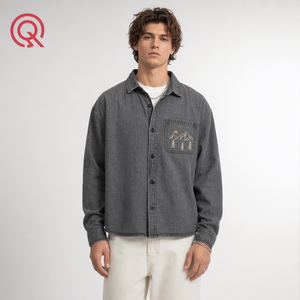
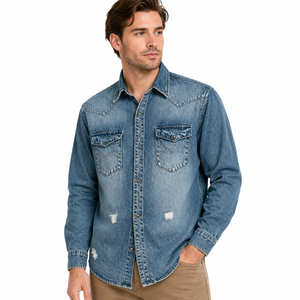
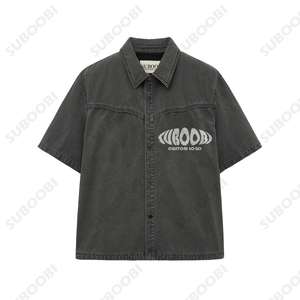
In high-density fashion districts like SoHo and Bedford Avenue, demand leans heavily toward oversized silhouetting, cropped hems, and hybrid fabrication. Products such as Cropped Denim Shirts with Raw Hems or Digital Mountain Print Overshirts (10 oz to 12 oz) serve as functional layer-wear over hoodies and luxury tees. Buyers require heavy-duty chain-stitching, raw brass snap hardware, and vintage-distressed collar treatments to satisfy discerning streetwear enthusiasts.
Scenario B: Corporate & Creative Workwear (Midtown & Financial District)
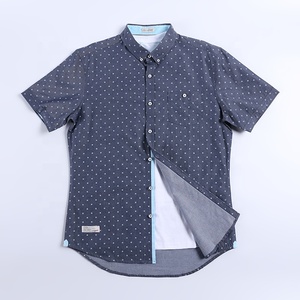
As Manhattan corporate dress codes shift toward "elevated business casual," financial and tech firms in Midtown are adopting ultra-lightweight denim and fine-count chambray button-downs (5.0 oz to 6.5 oz). Features include clean-finished point collars, mother-of-pearl buttons, discreet tonal stitching, and anti-wrinkle finishing. These garments transition seamlessly from daytime meetings to evening networking events along the West Side waterfront.
Scenario C: Weekend & Resort Casual (The Hamptons, Hudson Valley, Upstate NY)
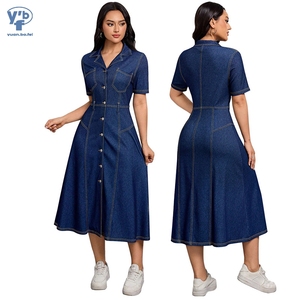
Upstate New York boutique buyers favor relaxed-fit vintage washed denim, short-sleeve camp collar denim shirts, and full-length denim shirt dresses. A-line denim midi dresses featuring elastic waistlines and soft enzyme washes cater to regional resort wear and autumn weekend travel markets. Durability and soft skin-feel are top priorities for this demographic.
4. Technical Denim Manufacturing Specifications & Material Engineering
For apparel brands sourcing through overseas exporters, precise technical specifications prevent quality drift during bulk production runs. Below are the key manufacturing parameters that should be incorporated into every tech pack:
Fabric Weight & Weave Dynamics
- Lightweight Denim (4.5 oz – 6.5 oz / 150 – 220 GSM): Ideal for summer short-sleeve styles, internal layering, and denim dresses. Utilizing 30s or 40s single-ply cotton yarns, these fabrics offer high breathability and fluid drape.
- Medium Weight Denim (7.0 oz – 9.5 oz / 240 – 320 GSM): The universal benchmark for standard long-sleeve button-down shirts. Built with 3/1 right-hand twill construction, offering structural stability while maintaining comfort.
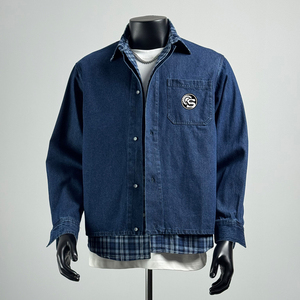
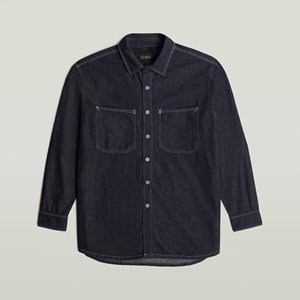
- Heavyweight Overshirts (10.0 oz – 12.5 oz / 340 – 420 GSM): Utilized for outerwear shackets and dual-pocket utility shirts. Constructed with coarse 10s or 12s ring-spun yarns, reinforced with bar-tacks at high-stress points.
Wet-Processing & Eco-Washing Technologies
Post-sewing wet processing determines the visual character and longevity of denim shirts. Leading exporters serving the US market utilize advanced, low-liquor ratio washing systems:
- Enzyme Wash: Neutral cellulase enzymes break down surface fibers to achieve a soft hand-feel and subtle edge abrasion without weakening structural seams.
- Ozone Bleaching: Gaseous ozone replaces harmful sodium hypochlorite bleach, reducing water usage by up to 80% while achieving clean indigo fading.
- Laser Distressing: Computer-controlled lasers etch complex digital prints, vintage whiskering, and localized wear marks directly onto the assembled denim shirt with 100% batch-to-batch consistency.
5. Enterprise Advantages: Manufacturing Excellence & Export Infrastructure
Partnering with an established apparel manufacturer like Oasis Shirts delivers distinct operational advantages for New York brands looking to optimize their global supply chains. Backed by over two decades of production heritage, an extensive multi-country factory footprint, and a Beverly Hills executive team, our platform bridges international manufacturing efficiencies with localized US market support.
Core Enterprise Capabilities at a Glance:
• Low Minimum Order Quantities: Starting at just 50 pieces per style for blank stock and 100–150 pieces for custom private label programs, allowing brands to test micro-capsules without over-leveraging capital.
• Global Factory Compliance: All partner units operate under rigorous international standards, including OEKO-TEX Standard 100, BSCI, ISO 9001, SA8000, and Disney FAMA approvals.
• End-to-End Private Labeling: From custom woven neck labels and branded hangtags to barcode ticketing, polybagging, and retail-ready carton consolidation.
• East Coast Supply Chain Integration: Streamlined DDP shipping routes directly into the Port of New York and New Jersey (Port Newark/Elizabeth) and JFK Air Cargo facilities.
6. Frequently Asked Questions (FAQ) for NYC Denim Buyers
What is the standard lead time for custom denim shirt orders shipping to New York?
Pre-production fit and wash samples are delivered within 7 to 10 working days. Following physical sample approval, bulk production typically requires 12 to 18 working days for stock-supported fabrics, or 25 to 35 working days for custom-milled denim constructions. Air freight delivery to NYC takes 4 to 7 days, while ocean freight to the Port of NY/NJ takes approximately 25 to 32 days.
How do overseas exporters manage denim shrinkage across different wash cycles?
Reputable exporters conduct pre-wash fabric testing and automated pattern-grading adjustments. Because denim shrinks non-linearly (typically 3%–5% in warp and 2%–4% in weft during heavy stone or enzyme washes), patterns are digitally expanded prior to cutting to ensure final post-wash garments align exactly with approved size measurement specs.
What import documentation and regulatory standards apply to denim shirts imported into NY?
Imports into the United States must comply with U.S. Customs and Border Protection (CBP) rules, FTC Fiber Identification Laws, and CPSC flame resistance standards (16 CFR Part 1610). Key documentation includes the Commercial Invoice, Packing List, Bill of Lading, and HTS Classification (typically HTS 6205.20 for men's cotton shirts and HTS 6206.30 for women's cotton shirts). Test certificates for lead-free trims and AZO-free dyes are provided upon request.
Can New York brands order custom branded hardware and private label trims?
Yes. Private label programs support fully customized shank buttons, pearl snaps, rivets, leather back-patches, woven neck labels, and printed care tags. Brands can specify Pantone colors, metal plating finishes (e.g., antique brass, matte black, shiny silver), and custom logo engraving.
7. Conclusion & Next Steps for Procurement Directors
Selecting the right denim shirt exporter is a pivotal strategic decision for New York fashion labels, retail buyers, and corporate merchandise teams. By balancing low MOQ capabilities with high-tier factory compliance, precise wet-processing controls, and rapid East Coast logistics, brands can protect product margins while staying responsive to shifting market demand. Contact our dedicated apparel merchandising specialists today to request fabric swatches, technical spec sheets, or a custom quotation tailored to your upcoming collection drop.